

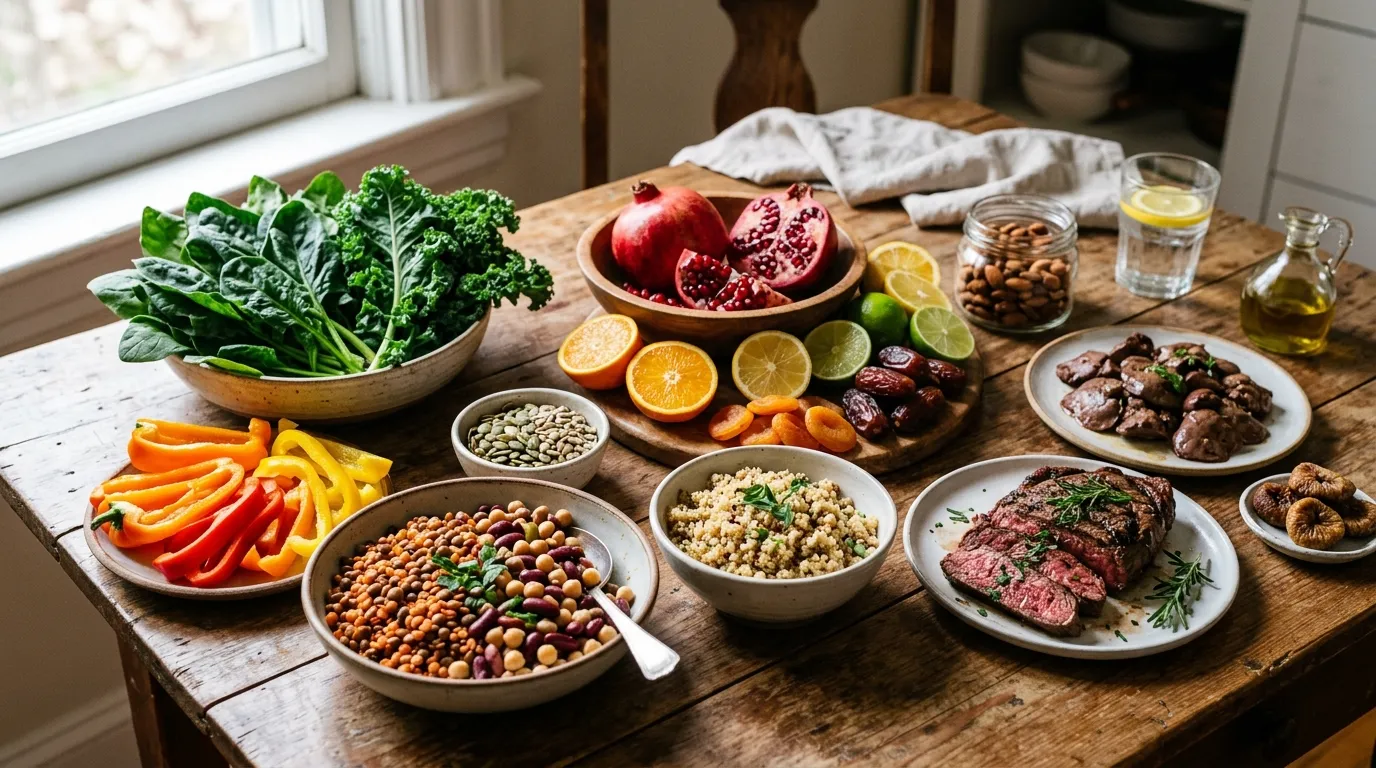
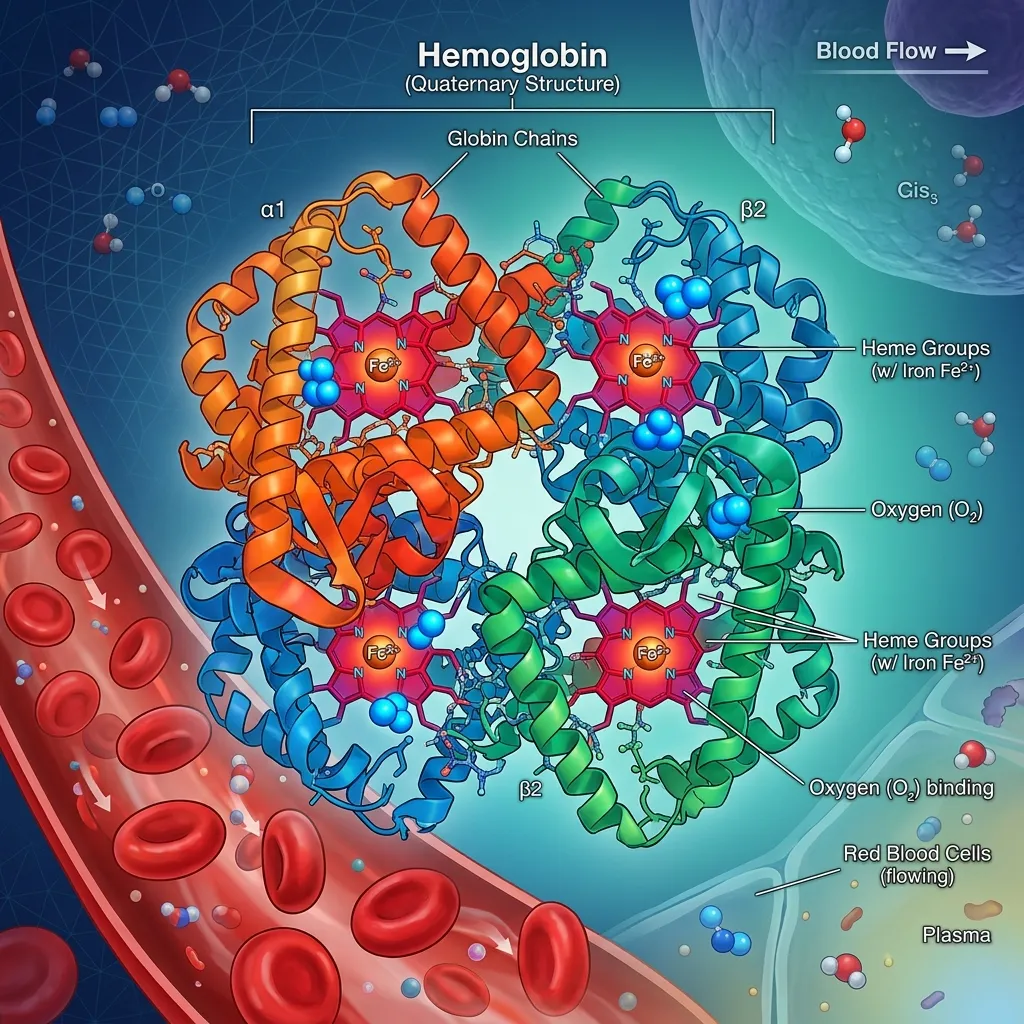
Iron sits at the heart of every hemoglobin molecule. Without enough iron, your body simply cannot produce enough hemoglobin—which is why iron rich foods for hemoglobin form the foundation of any blood-building diet.
Heme vs. Non-Heme Iron: What’s the Difference?
There are two types of dietary iron, and they behave very differently in your body.
- Heme iron comes from animal sources like meat, poultry, and fish. Your body absorbs it easily—at a rate of around 15 to 35 percent.
- Non-heme iron comes from plant sources like beans, lentils, and leafy greens. Absorption is lower, typically 2 to 20 percent, and depends heavily on what you eat alongside it.
Choose heme iron if rapid absorption matters most to you, such as during pregnancy or recovery from blood loss. Choose non-heme iron paired with vitamin C if you follow a plant-based diet—the combination dramatically improves uptake.
How Much Iron Do You Need Each Day?
The recommended daily allowance for iron depends on age and sex. Adult men need about 8 milligrams per day, while women aged 19 to 50 need around 18 milligrams. Pregnant women need the most—about 27 milligrams daily—to support both their own blood supply and their baby’s growth.
What Affects Iron Absorption?
Some foods help your body absorb iron, while others block it. Vitamin C is the most powerful enhancer. On the flip side, tannins in tea and coffee, calcium in dairy, and phytates in grains can all reduce absorption. Timing your meals around these factors makes a measurable difference.
Top Iron-Rich Foods to Boost Hemoglobin
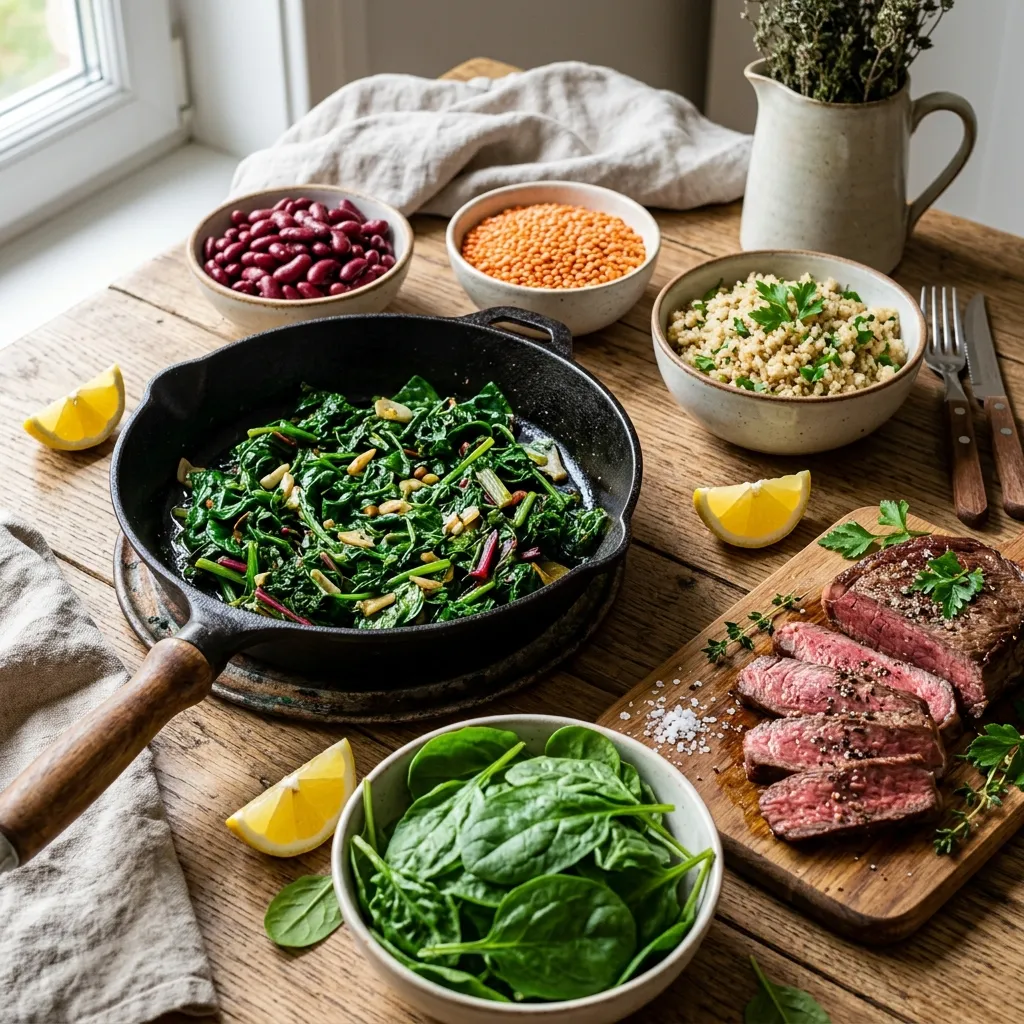 Knowing which foods to fill your plate with is the most practical step you can take. Here are the best foods for anemia, sorted by source.
Which Animal-Based Foods Are Highest in Iron?
Animal foods provide heme iron, the most easily absorbed form.
- Red meat: Beef, lamb, and venison rank among the richest sources of heme iron.
- Poultry: Chicken and turkey, especially the darker cuts, offer a solid iron boost.
- Fish and seafood: Salmon, tuna, oysters, and clams are excellent. Clams in particular pack an exceptional amount of iron per serving.
- Organ meats: Liver is one of the most iron-dense foods on the planet, delivering a large dose in a small portion.
What Are the Best Plant-Based Foods for Hemoglobin?
Plant foods supply non-heme iron, along with fiber and other nutrients. These are some of the best foods for anemia for vegetarians and vegans.
- Legumes: Lentils, chickpeas, and kidney beans are protein-packed and iron-rich.
- Dark leafy greens: Spinach, kale, and collard greens deliver iron plus folate.
- Fortified cereals and grains: Many breakfast cereals supply a full day’s worth of iron in one bowl.
- Nuts and seeds: Pumpkin seeds and cashews make convenient, iron-rich snacks.
- Dried fruits: Apricots and raisins concentrate iron and make easy additions to meals.
- Tofu and tempeh: These soy-based foods offer iron and protein in versatile, affordable forms.
To get the most from these iron rich foods for hemoglobin, pair them with a vitamin C source at the same meal.
The Role of Vitamin C in Iron Absorption
Vitamin C is the single most effective way to boost non-heme iron absorption. It converts iron into a form your body absorbs more readily, and it can increase absorption several times over when eaten with iron-rich plant foods.
A simple example: squeeze lemon over a lentil salad, or eat an orange with your iron-fortified cereal. The difference in absorption can be substantial.
Which Foods Are Rich in Vitamin C?
- Citrus fruits: Oranges, grapefruits, and lemons
- Berries: Strawberries and blueberries
- Bell peppers: Especially red and yellow varieties
- Broccoli: A double win, since it also contains iron
- Tomatoes: Fresh or cooked, they add vitamin C to countless dishes
Other Essential Nutrients for Hemoglobin Production
Iron gets most of the attention, but it cannot work alone. Several other nutrients are foods that boost red blood cells in their own right.
Why Is Folate Important for Red Blood Cells?
Folate, also known as vitamin B9, helps your body produce and maintain healthy red blood cells. A folate deficiency can cause its own form of anemia. Good sources include leafy greens, legumes, asparagus, avocado, and fortified grains.
What Role Does Vitamin B12 Play?
Vitamin B12 works hand in hand with folate to form red blood cells. Because it comes almost exclusively from animal products—meat, eggs, dairy, and fortified foods—vegetarians and vegans need to pay special attention to their intake, often through fortified foods or supplements.
How Does Copper Support Hemoglobin?
Copper helps your body absorb and use iron effectively. Without enough copper, iron cannot do its job. Find it in nuts, seeds, shellfish, and whole grains.
How to Build a Hemoglobin-Boosting Diet
Knowing the foods is one thing—putting them together is another. Here is how to turn this list into real meals.
Sample Meal Plan for Non-Vegetarians
- Breakfast: Scrambled eggs with spinach and a glass of orange juice
- Lunch: Grilled chicken with a side of broccoli and bell peppers
- Snack: A handful of cashews and dried apricots
- Dinner: Lean beef stir-fry with mixed vegetables and a squeeze of lemon
Sample Meal Plan for Vegetarians
- Breakfast: Iron-fortified cereal topped with strawberries
- Lunch: Lentil soup with a side salad dressed in lemon juice
- Snack: Pumpkin seeds and an orange
- Dinner: Tofu and chickpea curry over quinoa with steamed broccoli
How Do You Combine Foods to Maximize Absorption?
Three simple habits make a real difference:
- Pair non-heme iron with vitamin C at every meal.
- Save your tea and coffee for between meals, not with them.
- Keep dairy separate from your main iron-rich meals.
Hydration matters too. Drinking enough water supports healthy circulation and helps your body distribute oxygen efficiently.
What Foods and Habits Block Iron Absorption?
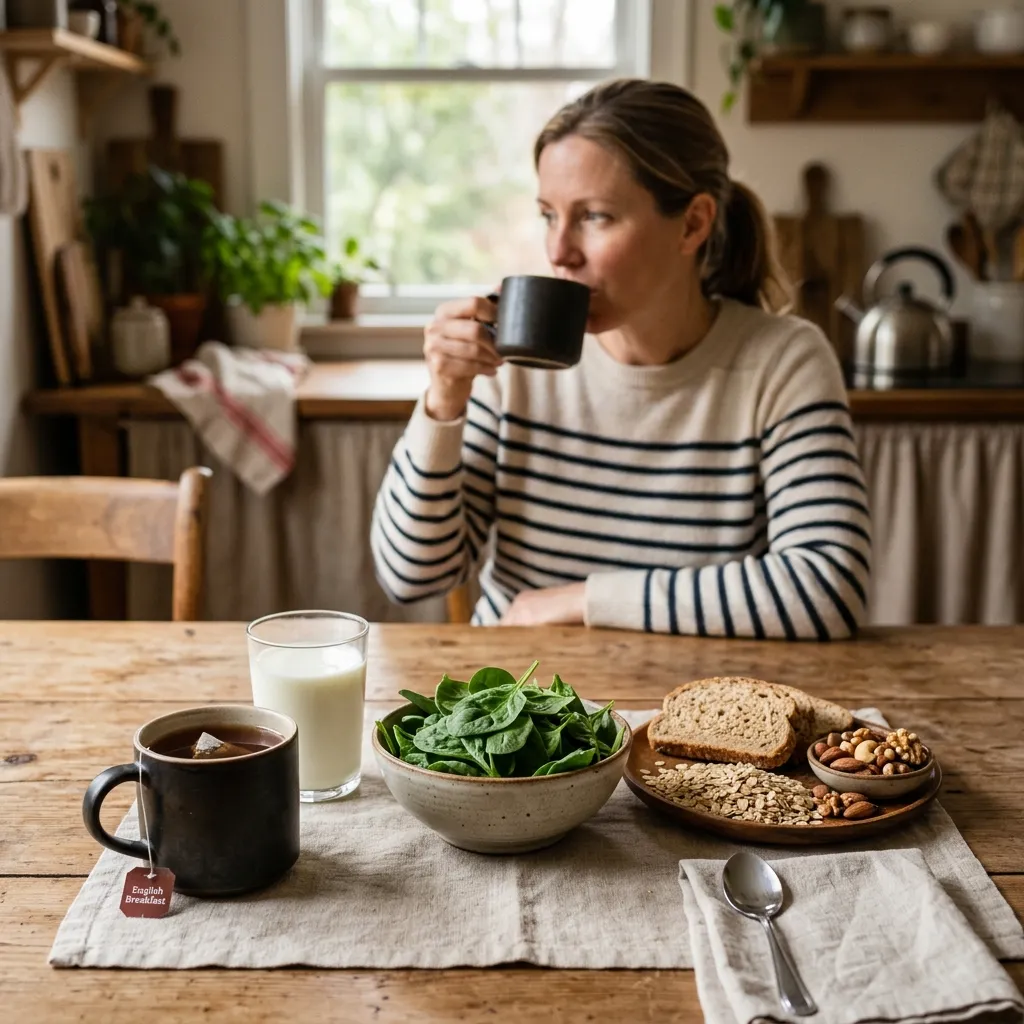 Even the best foods to increase hemoglobin can fall short if you pair them with the wrong companions. A few common culprits quietly reduce how much iron your body takes in.
- Phytic acid: Found in whole grains and legumes, phytates bind iron. Soaking, sprouting, or fermenting these foods reduces their effect.
- Tannins: Tea and coffee can cut iron absorption significantly when consumed with meals. Wait an hour after eating.
- Calcium: Dairy competes with iron for absorption. Enjoy your milk and cheese at separate times from iron-rich meals.
Smart timing solves most of these problems. You do not have to give up tea or dairy—just space them out from your iron-rich meals.
When Should You Consider Iron Supplements?
Sometimes diet alone is not enough. If your hemoglobin is significantly low, your doctor may recommend iron supplements. Ferrous sulfate is a common, affordable option, though it can cause stomach upset or constipation in some people.
Never start iron supplements without medical guidance. Too much iron can be harmful, and excess iron is especially dangerous for people with conditions like thalassemia or hemochromatosis. A simple blood test can confirm whether you truly need extra iron.
Dietary changes and medical treatment serve different purposes. Food helps maintain and gently improve hemoglobin over time. Supplements and medical care address deficiencies that diet cannot fix quickly. The two work best together, under a doctor’s supervision.
Lifestyle Factors That Affect Hemoglobin Levels
Food is the foundation, but a few lifestyle habits round out the picture.
- Exercise: Regular, moderate activity can stimulate red blood cell production over time. If low hemoglobin leaves you drained, our fatigue management in anemia guide offers practical energy strategies.
- Managing chronic conditions: Certain illnesses interfere with red blood cell production, so keeping them well controlled supports healthy levels.
- Stress reduction: Chronic stress can affect overall health and nutrient absorption, so techniques like deep breathing and quality sleep help.
According to the World Health Organization, anemia affects roughly 1.92 billion people worldwide, making it one of the most common health conditions globally. For more on the science of low hemoglobin, the Centers for Disease Control and Prevention offers trusted, accessible information.
Conclusion
Raising your hemoglobin naturally comes down to consistent, smart dietary choices. Building meals around foods to increase hemoglobin, including iron rich foods for hemoglobin such as red meat, lentils, leafy greens, and fortified cereals, can support healthy blood production. Pairing these foods with vitamin C-rich fruits and vegetables helps maximize iron absorption, while nutrients like folate, vitamin B12, and copper contribute to healthy red blood cell formation.
Small, sustainable changes can make a meaningful difference over time. Whether it’s adding citrus fruits to meals, choosing iron-rich snacks, or following a balanced diet, these habits can help improve energy levels and overall well-being. However, the best foods for anemia depend on the underlying cause of low hemoglobin. Nutritional deficiencies, chronic illnesses, and inherited blood disorders may require different approaches.
Frequently Asked Questions
1. How quickly can diet increase hemoglobin?
For mild iron-deficiency anemia, you may notice more energy within two to four weeks of eating more foods to increase hemoglobin. However, fully restoring iron stores often takes two to three months. Consistency matters more than any single meal.
2. Are there side effects to eating too many iron-rich foods?
For most healthy people, getting iron from food is safe because the body regulates absorption. However, people with conditions like hemochromatosis or thalassemia can accumulate dangerous iron levels. If you have an inherited blood disorder, talk to your doctor before increasing iron intake.
3. Can vegetarians increase hemoglobin without eating meat?
Yes. Vegetarians can raise hemoglobin by eating plenty of iron rich foods for hemoglobin like lentils, chickpeas, tofu, fortified cereals, and leafy greens. Always pair these with vitamin C foods to boost absorption, since plant-based non-heme iron is harder for the body to absorb.
4. What is the single best food to increase hemoglobin?
There is no single best food, but liver and clams rank among the most iron-dense options for heme iron. For plant-based eaters, lentils and fortified cereals are top choices. The best foods for anemia depend on your diet and health needs.
5. Does drinking coffee or tea lower hemoglobin?
Coffee and tea contain tannins that reduce iron absorption when consumed with meals. They do not lower hemoglobin directly, but drinking them alongside iron-rich foods can limit how much iron you absorb. Wait about an hour after eating to enjoy them.
6. How does vitamin C help increase hemoglobin?
Vitamin C converts non-heme iron into a form your body absorbs more easily, sometimes increasing absorption several times over. Eating vitamin C foods—like oranges, bell peppers, or strawberries—alongside iron-rich meals is one of the simplest ways to boost hemoglobin.
7. Can low hemoglobin be cured by diet alone?
Mild cases of iron-deficiency anemia often improve with diet alone. Moderate to severe cases usually require iron supplements or medical treatment. Diet supports recovery but may not be enough on its own, so see a doctor if symptoms persist.
8. Are eggs good for increasing hemoglobin?
Eggs contain some iron, along with vitamin B12 and folate, which support red blood cell production. While not as iron-rich as red meat or lentils, eggs are a helpful part of a hemoglobin-boosting diet, especially for vegetarians who eat them.
9. Which fruits are best for increasing hemoglobin?
Dried fruits like apricots and raisins are highest in iron. Vitamin C-rich fruits like oranges, strawberries, and guava help your body absorb iron better. Combining both types—dried fruit with a citrus snack—maximizes the benefit.
10. Should I take iron supplements or change my diet first?
For mild cases, dietary changes are usually the first step. Supplements are reserved for confirmed deficiencies or low levels that diet cannot fix quickly. Always get a blood test and medical advice before starting iron supplements, as too much iron can be harmful.
