


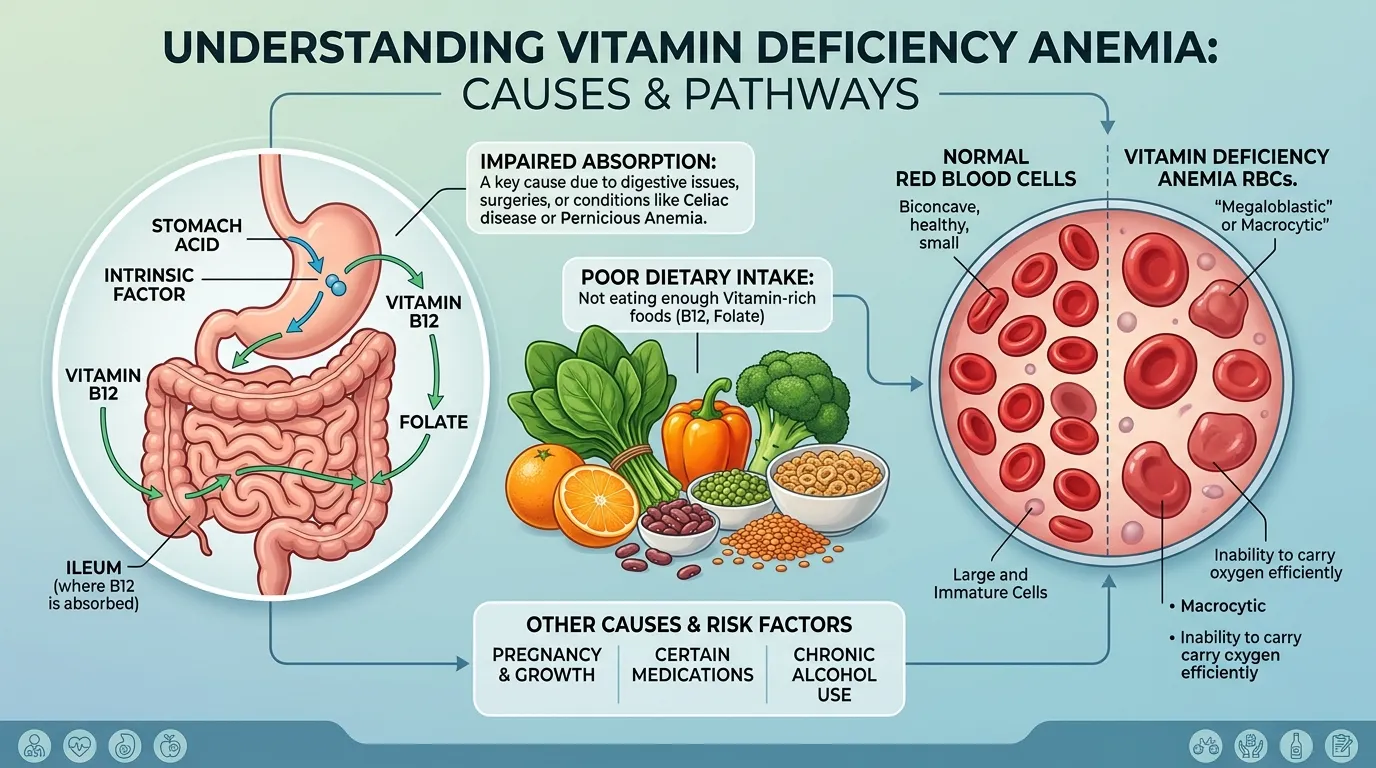
Vitamin deficiency anemia develops when your body lacks the nutrients it needs to make enough healthy red blood cells. The most common culprits are vitamin B12 and folate, two nutrients essential for building the oxygen-carrying cells that keep your body energized. When these run low, red blood cells become too large, too few, or poorly formed—leaving you tired, weak, and short of breath.
Understanding the root causes matters because the fix depends entirely on what’s driving the deficiency. A vegan diet calls for a different solution than a malabsorption disorder or a medication side effect. This guide breaks down the full picture: the vitamins involved, the primary vitamin deficiency anemia causes, the warning signs, how doctors diagnose it, and how to treat and prevent it.
One important note before we begin: this article offers general health education, not personalized medical advice. Always consult a qualified healthcare professional before starting supplements or making major dietary changes—especially if you have an inherited blood disorder such as thalassemia, where nutritional needs differ significantly.
What Is Vitamin Deficiency Anemia?
 Anemia is a condition where the blood lacks enough healthy red blood cells or hemoglobin to carry adequate oxygen throughout the body. According to the World Health Organization, anemia affects roughly 1.92 billion people worldwide, making it one of the most common health conditions on the planet.
Vitamin deficiency anemia is a specific type of anemia caused by insufficient levels of key vitamins—primarily vitamin B12 and folate (vitamin B9). Without these nutrients, the bone marrow produces abnormally large, immature red blood cells that cannot function properly. This form is also called megaloblastic anemia, named for those oversized cells.
The condition is widespread but often underdiagnosed because its symptoms develop slowly. Many people attribute the fatigue and weakness to a busy schedule rather than a treatable nutritional gap. Left unaddressed, vitamin B12 deficiency anemia in particular can lead to lasting neurological damage—which is why recognizing the causes early is so important.
Which Vitamins Are Essential for Healthy Red Blood Cells?
Several nutrients work together to keep your blood healthy. When any of them runs short, red blood cell production suffers.
Why Is Vitamin B12 So Important for Blood Health?
Vitamin B12 is essential for red blood cell production and proper neurological function. It helps the bone marrow create healthy red blood cells and maintains the protective myelin sheath around your nerves.
When B12 runs low, two problems emerge. First, red blood cells form incorrectly, leading to vitamin B12 deficiency anemia. Second, nerve function deteriorates, producing symptoms like numbness, tingling, and balance problems. Because vitamin B12 comes almost exclusively from animal products, vegans and vegetarians face a higher risk of deficiency.
How Does Folate Support Red Blood Cell Formation?
Folate, also known as vitamin B9, drives cell growth and DNA synthesis. Like B12, it plays a central role in forming healthy red blood cells. A shortage leads to folate deficiency anemia, where the bone marrow churns out large, dysfunctional cells.
Folate is especially critical during pregnancy. It supports the rapid cell division needed for fetal growth and helps prevent neural tube defects. Pregnant women have higher folate requirements, which makes folate deficiency anemia a common concern during pregnancy.
What Role Does Vitamin C Play in Preventing Anemia?
Vitamin C does not build red blood cells directly, but it plays a vital supporting role. It dramatically improves the absorption of non-heme iron from plant foods, converting iron into a form your body takes up more easily.
Vitamin C also acts as a powerful antioxidant, protecting cells from damage. A severe, long-term vitamin C deficiency can contribute to anemia, both by reducing iron absorption and by affecting red blood cell health.
How Does Iron Connect to Vitamin Deficiency Anemia?
Iron sits at the core of every hemoglobin molecule—the protein that carries oxygen. While iron deficiency anemia is technically separate from vitamin deficiency anemia, the two often overlap. A diet poor in one nutrient is frequently poor in others. For more on building healthy blood through diet, see our guide on foods to increase hemoglobin.
What Are the Primary Vitamin Deficiency Anemia Causes?
The vitamin deficiency anemia causes fall into four main categories: dietary gaps, malabsorption, increased demand, and medication interference. Understanding which applies to you is the first step toward effective treatment.
How Does a Poor Diet Lead to Vitamin Deficiency Anemia?
Dietary insufficiency is one of the most common vitamin deficiency anemia causes. The body cannot make B12 or folate on its own, so it depends entirely on food and supplements.
- Vegan and vegetarian diets: Because vitamin B12 comes almost exclusively from animal sources—meat, eggs, dairy, and fish—people who avoid these foods are at higher risk of vitamin B12 deficiency anemia. Fortified foods and supplements help fill the gap.
- Limited folate intake: Diets low in leafy greens, legumes, and fortified grains can lead to folate deficiency anemia over time.
- Poor overall nutrition: Restrictive diets, alcohol misuse, and reliance on highly processed foods often leave the body short on multiple nutrients at once.
How Do Malabsorption Issues Cause Vitamin Deficiency Anemia?
Sometimes the problem is not what you eat but what your body can absorb. Several conditions interfere with nutrient uptake in the digestive tract.
- Pernicious anemia: This autoimmune condition is a leading cause of vitamin B12 deficiency anemia. The body fails to produce intrinsic factor, a protein the gut needs to absorb B12 from food.
- Crohn’s disease and celiac disease: These inflammatory and autoimmune conditions damage the intestinal lining, reducing the absorption of both B12 and folate.
- Gastric bypass surgery: Procedures that remove or bypass parts of the stomach and intestine cut down on the surface area available for nutrient absorption.
- Chronic alcohol use: Heavy drinking interferes with folate absorption and storage, and it often comes paired with poor diet.
Which Situations Increase the Body’s Demand for Vitamins?
Certain life stages and conditions raise your nutrient needs beyond what a typical diet provides.
- Pregnancy and lactation: Growing a baby demands large amounts of folate, making folate deficiency anemia a frequent concern during pregnancy.
- Rapid growth periods: Infants, children, and adolescents need more nutrients to support fast physical development.
- Certain medical conditions: Cancers and other illnesses that speed up cell turnover increase the body’s consumption of folate and B12.
Can Medications Cause Vitamin Deficiency Anemia?
Yes. Several common medications interfere with how the body absorbs or uses key vitamins.
- Proton pump inhibitors (PPIs): These acid-reducing drugs can lower B12 absorption when taken long-term, since stomach acid is needed to release B12 from food.
- Metformin: This widely used diabetes medication is linked to reduced vitamin B12 absorption over time.
- Anti-seizure medications: Certain drugs used to control epilepsy can interfere with folate metabolism, raising the risk of folate deficiency anemia.
What Are the Symptoms of Vitamin Deficiency Anemia?
 Vitamin deficiency anemia symptoms often develop gradually, making them easy to overlook. As oxygen delivery drops, the body begins to signal that something is wrong.
What Are the General Symptoms of Anemia?
Most types of anemia share a common set of warning signs:
- Persistent fatigue and weakness
- Pale skin
- Shortness of breath
- Dizziness or lightheadedness
- Cold hands and feet
- Headaches and rapid heartbeat
If low blood levels are leaving you drained, our fatigue management in anemia guide offers practical strategies for protecting your energy.
What Are the Specific Symptoms of Vitamin B12 Deficiency Anemia?
Vitamin B12 deficiency anemia stands apart because it affects the nervous system as well as the blood. These neurological symptoms are a key warning sign:
- Numbness and tingling in the hands and feet
- Balance and coordination problems
- Cognitive issues like memory problems and confusion
- A sore, swollen tongue (glossitis)
- Mood changes, including depression and irritability
These neurological symptoms make early detection critical. Nerve damage from prolonged B12 deficiency can become permanent if not treated.
What Are the Specific Symptoms of Folate Deficiency Anemia?
Folate deficiency anemia produces many of the same general symptoms but without the neurological effects seen with B12 deficiency.
Watch for:
- Fatigue and weakness similar to other forms of anemia
- A sore, red tongue
- Growth problems in children
- Irritability and difficulty concentrating
How Is Vitamin Deficiency Anemia Diagnosed?
Accurate diagnosis is the foundation of effective treatment. Without knowing the exact cause, treatment becomes guesswork.
A doctor will typically start with your medical history and a physical exam, looking for signs like pale skin, a sore tongue, or neurological changes.
Blood tests confirm the diagnosis:
- Complete Blood Count (CBC): This first-line test measures hemoglobin and red blood cell size. Unusually large cells point toward vitamin deficiency anemia.
- Serum B12 and folate levels: These tests directly measure how much of each vitamin is circulating in your blood.
- Methylmalonic acid (MMA) and homocysteine levels: Elevated levels of these markers help confirm a B12 deficiency and distinguish it from a folate deficiency.
Because some inherited conditions mimic vitamin deficiency anemia on a CBC, doctors sometimes need to dig deeper. Our guide on the blood test differences between anemia and thalassemia explains these distinctions in detail.
How Is Vitamin Deficiency Anemia Treated and Managed?
Treatment depends on the underlying cause, but the goal is always the same: restore healthy vitamin levels and address whatever is depleting them.
Which Foods Help Treat Vitamin Deficiency Anemia?
Diet is the foundation for prevention and mild cases.
Focus on foods rich in the vitamins you lack:
- Vitamin B12 sources: Meat, poultry, fish, eggs, dairy, and fortified cereals. Vegans and vegetarians should prioritize fortified foods or supplements.
- Folate sources: Dark leafy greens, lentils, chickpeas, asparagus, broccoli, avocado, and fortified grains.
- Vitamin C sources: Citrus fruits, bell peppers, strawberries, and tomatoes, which boost iron absorption.
When Are Supplements Necessary?
When diet alone is not enough, supplements step in. Oral B12 works for mild deficiencies, while injections are often needed when absorption is impaired—such as in pernicious anemia. Folic acid supplements quickly correct folate deficiency anemia. Always work with your doctor to find the right dose, since the cause shapes the approach.
A critical caution: people with inherited blood disorders like thalassemia have very different nutritional needs and often carry too much iron. If you have such a condition, see our best foods for thalassemia patients guide and always confirm your plan with a hematologist.
How Can You Prevent Vitamin Deficiency Anemia?
 Prevention comes down to consistent, smart habits. Eat a varied diet rich in B12, folate, and vitamin C. If you follow a plant-based diet, plan for fortified foods or supplements. Pregnant women should discuss folate needs with their doctor early on. And if you take medications known to affect vitamin absorption, ask about regular monitoring.
For trusted, accessible information on anemia, the Centers for Disease Control and Prevention offers reliable resources worth bookmarking.
Conclusion
Vitamin deficiency anemia causes are varied—dietary gaps, malabsorption, increased demand, and medication effects—but nearly all of them are treatable once identified. The key is recognizing the early vitamin deficiency anemia symptoms, getting the right blood tests, and matching treatment to the cause.
Start by reviewing your diet this week. Are you getting enough B12 and folate? If you suspect a deficiency or if persistent fatigue and weakness are weighing you down, schedule a blood test with your healthcare provider. Early action protects you from complications, especially the lasting nerve damage that can follow untreated vitamin B12 deficiency anemia.
For more on building healthy blood through nutrition, explore our foods to increase hemoglobin diet guide and our fatigue management in anemia guide.
Frequently Asked Questions
1. What are the main vitamin deficiency anemia causes?
The main vitamin deficiency anemia causes are low levels of vitamin B12 and folate. These shortfalls usually result from poor diet, malabsorption conditions like pernicious anemia or celiac disease, increased demand during pregnancy, or medications that block nutrient absorption.
2. What is the difference between vitamin B12 deficiency anemia and folate deficiency anemia?
Both cause large, immature red blood cells and similar fatigue. The key difference is that vitamin B12 deficiency anemia also damages the nervous system, causing numbness, tingling, and balance problems. Folate deficiency anemia does not produce these neurological symptoms.
3. What are the early vitamin deficiency anemia symptoms?
Early vitamin deficiency anemia symptoms include persistent fatigue, weakness, pale skin, shortness of breath, and dizziness. B12 deficiency may add numbness, tingling, and a sore tongue, while folate deficiency often causes a red, sore tongue without nerve symptoms.
4. Can a vegan or vegetarian diet cause vitamin B12 deficiency anemia?
Yes. Vitamin B12 comes almost exclusively from animal products, so vegans and vegetarians face a higher risk of vitamin B12 deficiency anemia. Fortified foods and B12 supplements are the most reliable way to meet your needs on a plant-based diet.
5. How is vitamin deficiency anemia diagnosed?
Doctors diagnose vitamin deficiency anemia using a complete blood count, serum B12 and folate tests, and sometimes methylmalonic acid and homocysteine levels. These tests confirm the deficiency and help identify whether B12 or folate is the cause.
6. Can medications cause vitamin deficiency anemia?
Yes. Proton pump inhibitors and metformin can reduce vitamin B12 absorption over time, while certain anti-seizure drugs interfere with folate metabolism. If you take these long-term, ask your doctor about monitoring your vitamin levels.
7. How long does it take to recover from vitamin deficiency anemia?
Many people feel more energetic within a few weeks of starting treatment. Full recovery can take several months as the body rebuilds healthy red blood cells. Neurological symptoms from B12 deficiency may take longer and, if severe, may not fully reverse.
8. Is folate deficiency anemia dangerous during pregnancy?
Folate deficiency anemia is a common concern during pregnancy because folate needs rise sharply. Low folate can affect fetal development and raise the risk of neural tube defects, which is why doctors often recommend folate supplements before and during pregnancy.
9. Can diet alone cure vitamin deficiency anemia?
Mild cases caused by diet often improve with vitamin-rich foods. However, deficiencies caused by malabsorption usually require supplements or injections, since the gut cannot take up enough from food. Always confirm the cause with a doctor before relying on diet alone.
10. Who is most at risk of vitamin deficiency anemia?
Those most at risk include vegans and vegetarians, pregnant women, older adults, people with digestive disorders like Crohn’s or celiac disease, those who have had gastric surgery, and anyone taking medications that affect vitamin absorption.
