


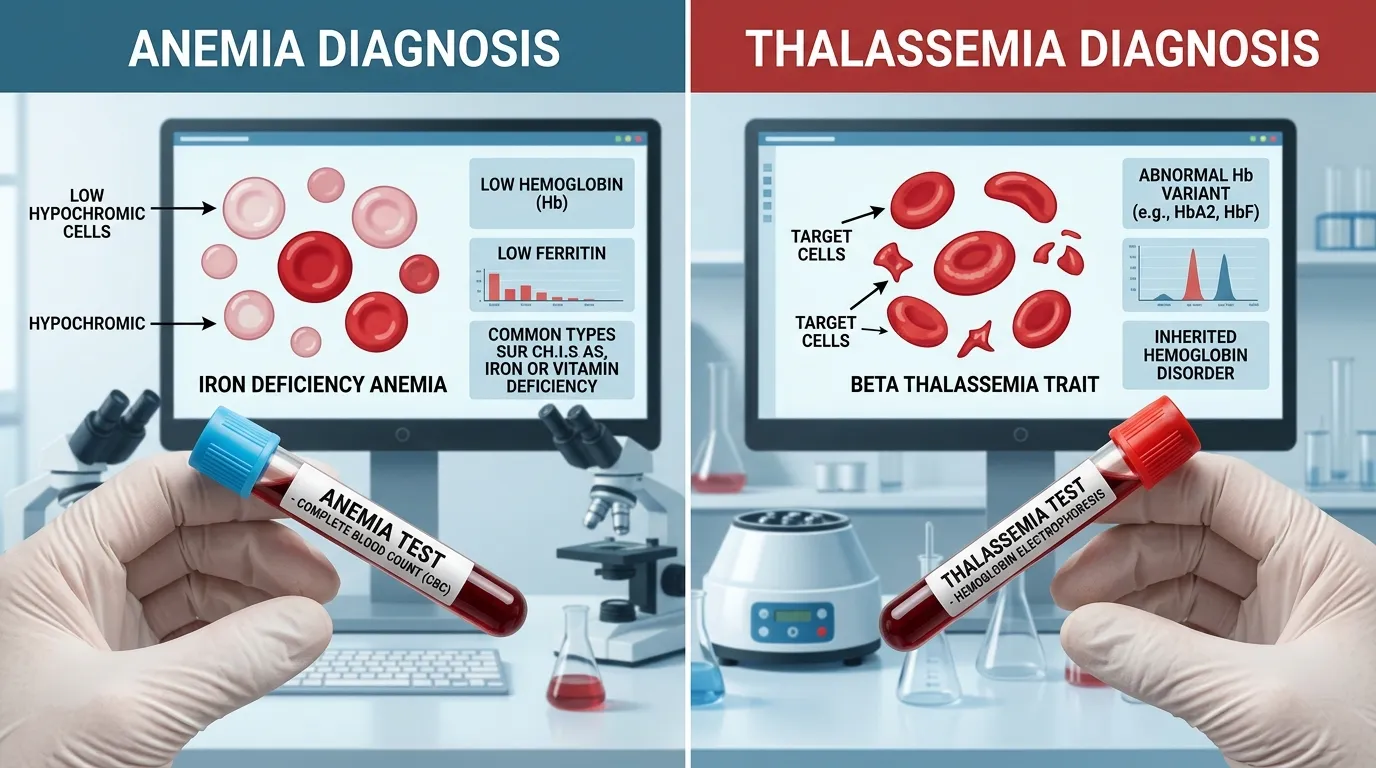
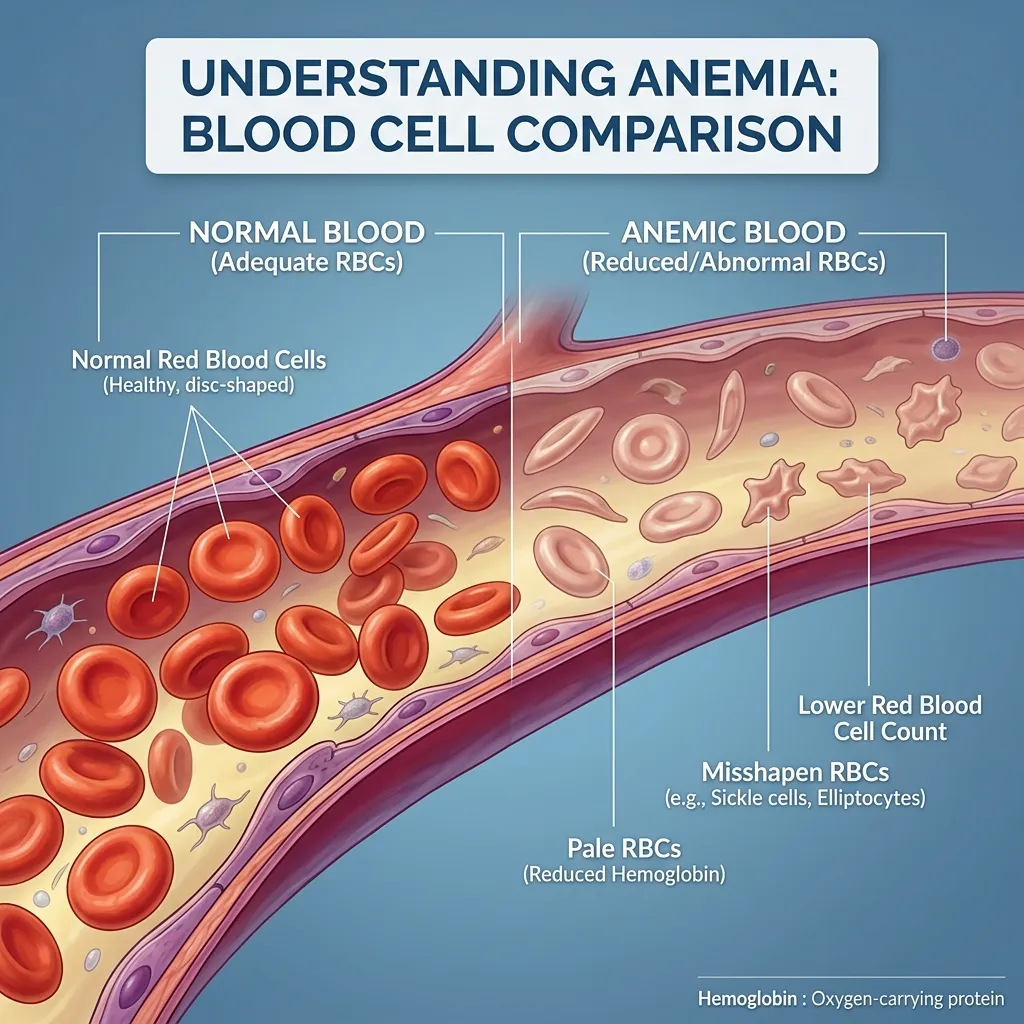
Thalassemia is an inherited blood disorder where the body makes too little normal hemoglobin. Unlike most forms of anemia, thalassemia is genetic—you are born with it, and it cannot be cured through diet. It passes from parents to children through faulty genes.
What are the main types of thalassemia?
Thalassemia is grouped by which globin chain is affected:
- Alpha-thalassemia: Caused by problems making alpha globin chains. Severity ranges from a silent carrier state to serious conditions.
- Beta-thalassemia: Caused by problems making beta globin chains. It appears as minor, intermedia, or major forms.
Beta-thalassemia minor often causes only mild anemia. Beta-thalassemia major, the most severe form, can require lifelong blood transfusions.
How is thalassemia inherited?
Thalassemia follows a recessive inheritance pattern. If both parents are carriers, there is a 25% chance of having a child with a severe form, a 50% chance of a carrier child, and a 25% chance of a fully healthy child. This is why screening before pregnancy matters so much.
What are the symptoms and complications of thalassemia?
Symptoms depend on severity. Mild cases may cause little more than slight anemia, while severe cases lead to fatigue, pale or yellowish skin, slowed growth in children, bone deformities, and an enlarged spleen. Without treatment, severe thalassemia can cause serious organ complications.
What blood tests are used to diagnose anemia and thalassemia?
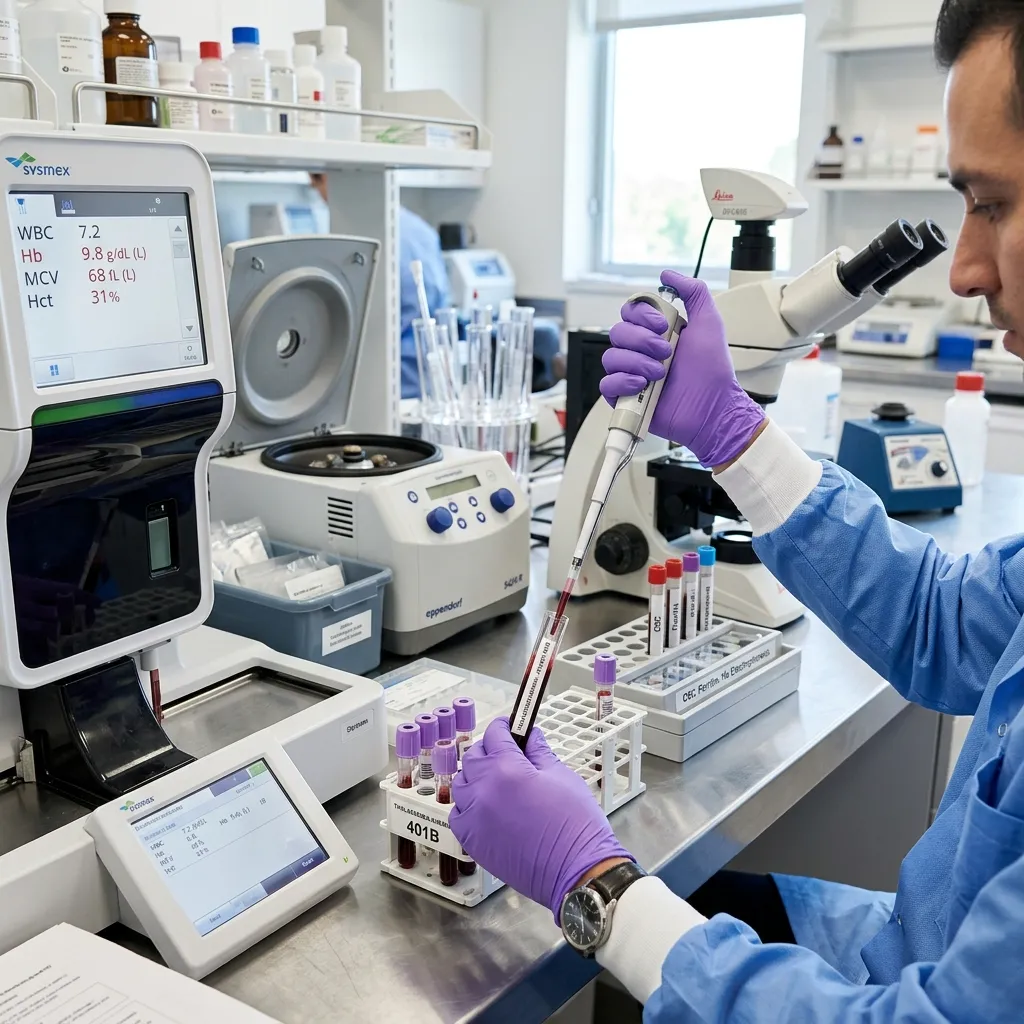 Both conditions start with the same first test, but the path quickly splits depending on what the results show. Understanding each test helps you see how doctors narrow things down.
How does a Complete Blood Count (CBC) help?
The CBC is the foundation of any blood test for anemia vs thalassemia. It measures several values that give early clues:
- Hemoglobin (Hb): Low in both conditions, showing the severity of anemia.
- Mean Corpuscular Volume (MCV): Measures red blood cell size. A low MCV (small cells) appears in both iron deficiency and thalassemia.
- Red Blood Cell (RBC) count: Often normal or high in thalassemia, but low in iron deficiency anemia.
This overlap is exactly why a CBC alone cannot tell the two apart. For a deeper breakdown of these values, see this guide on how to read CBC for thalassemia.
Which specific tests confirm anemia?
When the CBC suggests anemia, doctors order targeted follow-up tests:
- Iron studies: Serum iron, ferritin, and total iron-binding capacity (TIBC) reveal whether iron levels are low. Low ferritin strongly points to iron deficiency.
- Vitamin B12 and folate levels: These rule out vitamin deficiency anemia.
- Reticulocyte count: Measures how many new red blood cells the bone marrow is producing.
Which specific tests confirm thalassemia?
When iron studies come back normal but anemia persists, doctors move toward tests that detect thalassemia:
- Hemoglobin electrophoresis: Separates and measures hemoglobin types. An elevated HbA2 level is a classic sign of beta-thalassemia. Learn more in this guide on hemoglobin electrophoresis explained.
- HPLC (High-Performance Liquid Chromatography): A faster, highly precise modern method used in many labs to identify hemoglobin variants.
- Genetic testing: The gold standard for confirming thalassemia and identifying the exact mutation, especially useful for family planning.
How do blood tests differentiate anemia from thalassemia?
The real value of a blood test for anemia vs thalassemia lies in comparing specific markers side by side. A few key numbers usually point clearly toward one condition or the other.
Which CBC values separate the two conditions?
The clearest distinction comes from three values working together:
- RBC count: Iron deficiency anemia typically shows a low RBC count. Thalassemia trait often shows a normal or high RBC count, because the body produces more small cells to compensate.
- RDW (Red Cell Distribution Width): Iron deficiency usually raises RDW, meaning cells vary widely in size. Thalassemia trait usually keeps RDW normal.
- MCV: Low in both, so this value alone cannot separate them.
How do specialized test results compare?
Once specialized tests come back, the picture sharpens further:
- Low ferritin + low iron points to iron deficiency anemia.
- Normal ferritin + elevated HbA2 points to beta-thalassemia trait.
- Abnormal hemoglobin variants on electrophoresis confirm a thalassemia type.
According to the Centers for Disease Control and Prevention (CDC), identifying the exact genetic mutation improves diagnostic accuracy and supports better genetic counseling for families.
A simple example of differentiation
Consider two patients with the same low hemoglobin and low MCV. Patient A has a low RBC count, high RDW, and low ferritin—this is iron deficiency anemia. Patient B has a high RBC count, normal RDW, and normal ferritin—this points to thalassemia trait, and electrophoresis later confirms an elevated HbA2. Same starting point, very different diagnoses.
When should you get a blood test for anemia or thalassemia?
Knowing the right time to get tested can prevent years of confusion and protect your long-term health. Some signs and situations clearly call for testing.
What symptoms warrant a blood test?
You should consider testing if you experience ongoing fatigue, pale skin, weakness, dizziness, or shortness of breath. In children, delayed growth is another important warning sign. These symptoms overlap between anemia and thalassemia, so testing is the only way to know for sure.
Who is at higher risk?
Certain factors raise your risk and should prompt earlier screening:
- A family history of thalassemia, unexplained anemia, or frequent transfusions.
- Belonging to populations where thalassemia is more common, including Mediterranean, Middle Eastern, South Asian, and Southeast Asian backgrounds.
- Anemia that does not improve after taking iron supplements.
Why does early screening matter?
Early testing is especially important before marriage and pregnancy, when carrier status can affect family planning decisions. For a full breakdown of ideal timing, read this guide on when to get thalassemia screening.
How are anemia and thalassemia treated?
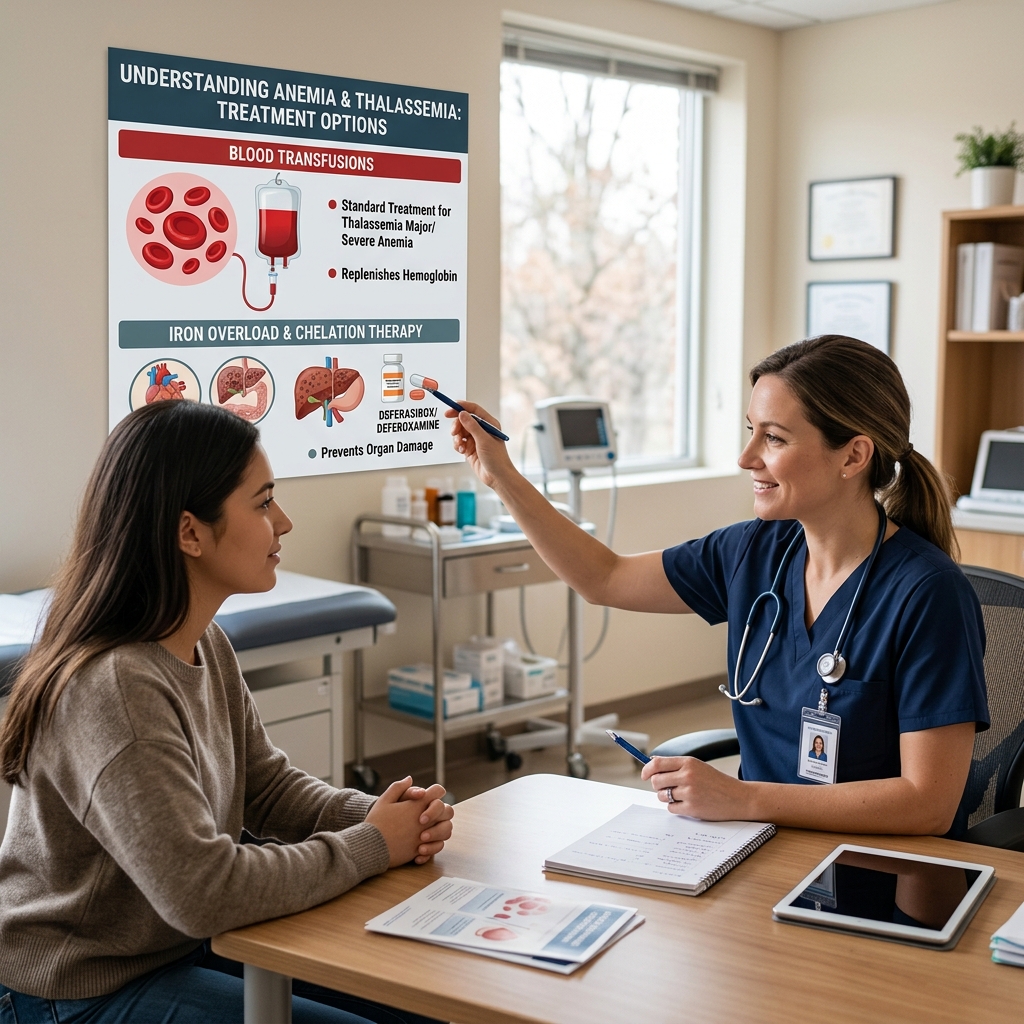 Treatment depends entirely on getting the diagnosis right—which is why distinguishing the two conditions matters so much.
How is anemia treated?
Treatment targets the underlying cause. Iron deficiency anemia is treated with iron supplements and dietary changes. Vitamin deficiency anemia is treated with B12 or folate. Anemia tied to chronic disease focuses on managing the root illness.
How is thalassemia managed?
Thalassemia cannot be cured with iron or diet. Mild cases may need only regular monitoring. Severe cases often require blood transfusions and iron chelation therapy to remove excess iron. Folic acid supplements support red blood cell production. Good nutrition also plays a supportive role—see these nutritional strategies for thalassemia.
What happens if the diagnosis is wrong?
Misdiagnosis is the biggest danger. People with thalassemia traits are sometimes given iron supplements for an iron deficiency they do not have. Because thalassemia patients often already struggle with iron buildup, extra iron can accumulate in the heart and liver, causing serious long-term damage. Accurate testing prevents this costly mistake.
Living with anemia or thalassemia
A clear diagnosis is the first step. Managing either condition well over time depends on consistent habits and regular care.
For anemia, lifestyle adjustments often focus on improving diet and addressing the cause, whether that is blood loss, low iron, or a vitamin gap. For thalassemia, the focus shifts toward managing iron levels, supporting blood production with folic acid, and avoiding excess dietary iron.
Both conditions benefit from regular monitoring. Ongoing blood tests help your doctor track changes, adjust treatment, and catch complications early. According to the World Health Organization (WHO), accurate diagnosis and informed counseling are central to managing inherited blood disorders. Pairing medical care with healthy daily habits gives you the best chance at a stable, energetic life.
1. Can a CBC alone diagnose thalassemia?
No, a CBC cannot confirm thalassemia on its own. In a blood test for anemia vs thalassemia, CBC may show patterns like low MCV with a normal or high RBC count, but confirmatory tests like hemoglobin electrophoresis or genetic testing are needed.
2. What is the main difference between anemia and thalassemia on a blood test?
The key difference in a blood test for anemia vs thalassemia is RBC count and RDW. Iron deficiency anemia usually shows low RBC and high RDW, while thalassemia trait shows normal or high RBC with normal RDW.
3. Why is it dangerous to confuse thalassemia with iron deficiency?
Confusing them during a blood test for anemia vs thalassemia can lead to unnecessary iron supplements. This may cause iron overload, which can damage organs like the heart and liver over time.
4. Which test confirms thalassemia most accurately?
Genetic testing is the gold standard in a blood test for anemia vs thalassemia because it identifies the exact mutation. Hemoglobin electrophoresis is also widely used and shows elevated HbA2 levels in beta-thalassemia.
5. Can you have both anemia and thalassemia at the same time?
Yes. A blood test for anemia vs thalassemia may show overlapping results if a person has both conditions, such as thalassemia trait with iron deficiency anemia, making diagnosis more complex.
6. How much does a blood test for anemia vs thalassemia cost?
Costs vary depending on the test. A CBC is inexpensive, while hemoglobin electrophoresis and genetic testing are more expensive. In a full blood test for anemia vs thalassemia workup, prices differ by lab and region.
7. Will iron supplements help if I have thalassemia?
No, unless iron deficiency is confirmed. In a blood test for anemia vs thalassemia, iron should only be given if tests clearly show deficiency, otherwise it may cause harm.
8. What does a high HbA2 level mean?
A high HbA2 level in a blood test for anemia vs thalassemia strongly suggests beta-thalassemia trait and helps distinguish it from iron deficiency anemia.
9. Who should get screened for thalassemia?
People with persistent anemia, family history, or poor response to iron should consider screening. A blood test for anemia vs thalassemia is especially important before pregnancy in high-risk groups.
10. Is a blood test for anemia or thalassemia painful?
No, it only involves a simple blood draw. In a blood test for anemia vs thalassemia, the procedure is quick, safe, and causes only minor temporary discomfort.
