

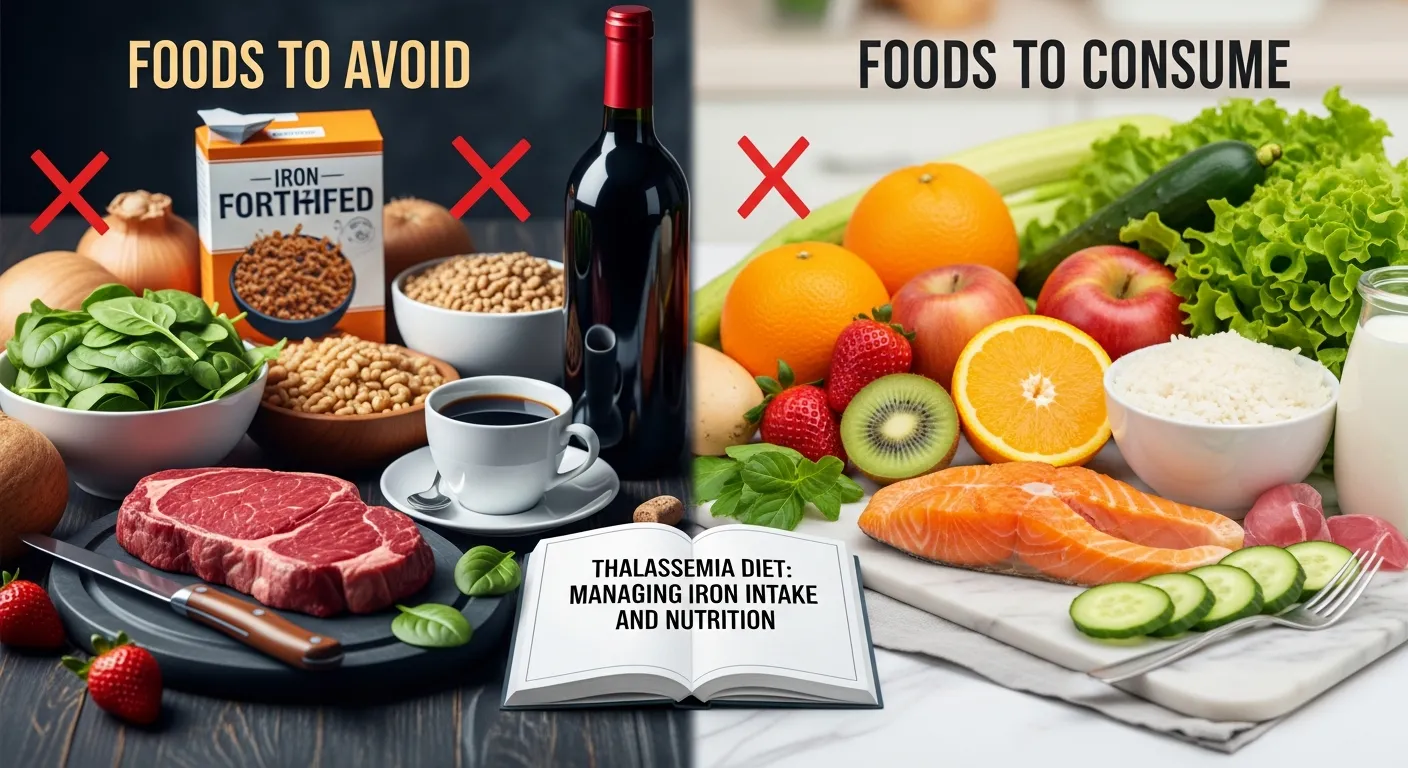
Discover thalassemia diet foods to avoid, including certain iron-rich foods and dietary habits that may contribute to iron overload. Learn how proper nutrition choices can support overall health, treatment goals, and long-term wellbeing for people living with thalassemia.
A thalassemia diet limits high-iron foods like red meat, organ meats, shellfish, and iron-fortified cereals to prevent dangerous iron overload, while supporting both physical and mental health.
Managing thalassemia involves more than blood transfusions and medication. What you eat plays a powerful role in your long-term health—especially when it comes to iron. People with thalassemia often build up too much iron in their bodies, which can quietly damage vital organs over time. The right diet helps slow that buildup and keeps you feeling stronger day to day.
This guide breaks down exactly which foods to avoid, which to eat in moderation, and which low-iron options support better blood health. You will also learn simple strategies to reduce how much iron your body absorbs from meals. Just as important, we explore mental health and thalassemia, because coping with thalassemia involves emotional well-being too.
Whether you are newly diagnosed or have lived with thalassemia for years, understanding the thalassemia diet foods to avoid can help you take charge of your care. Small, consistent choices add up to real protection for your heart, liver, and overall quality of life.
Beyond avoiding excess iron, a healthy eating plan can support energy levels, immune function, and overall wellness. Knowing the thalassemia diet foods to avoid also helps patients make informed decisions when eating at restaurants, attending social gatherings, or choosing packaged foods. We will discuss how vitamin C, calcium, tea, and other dietary factors influence iron absorption and what that means for your daily meals. In addition, you’ll find practical tips for meal planning, reading food labels, and maintaining balanced nutrition without unnecessary restrictions. By understanding the relationship between thalassemia and nutrition, you can take a proactive approach to managing your condition and reducing potential complications. Following the right dietary habits and understanding thalassemia diet foods to avoid can contribute to better health outcomes and improved quality of life in the future.
A quick note before we begin: always work with your doctor or dietitian before making major diet changes. This guide offers general education, not personalized medical advice.
Why Does Iron Overload Happen in Thalassemia?
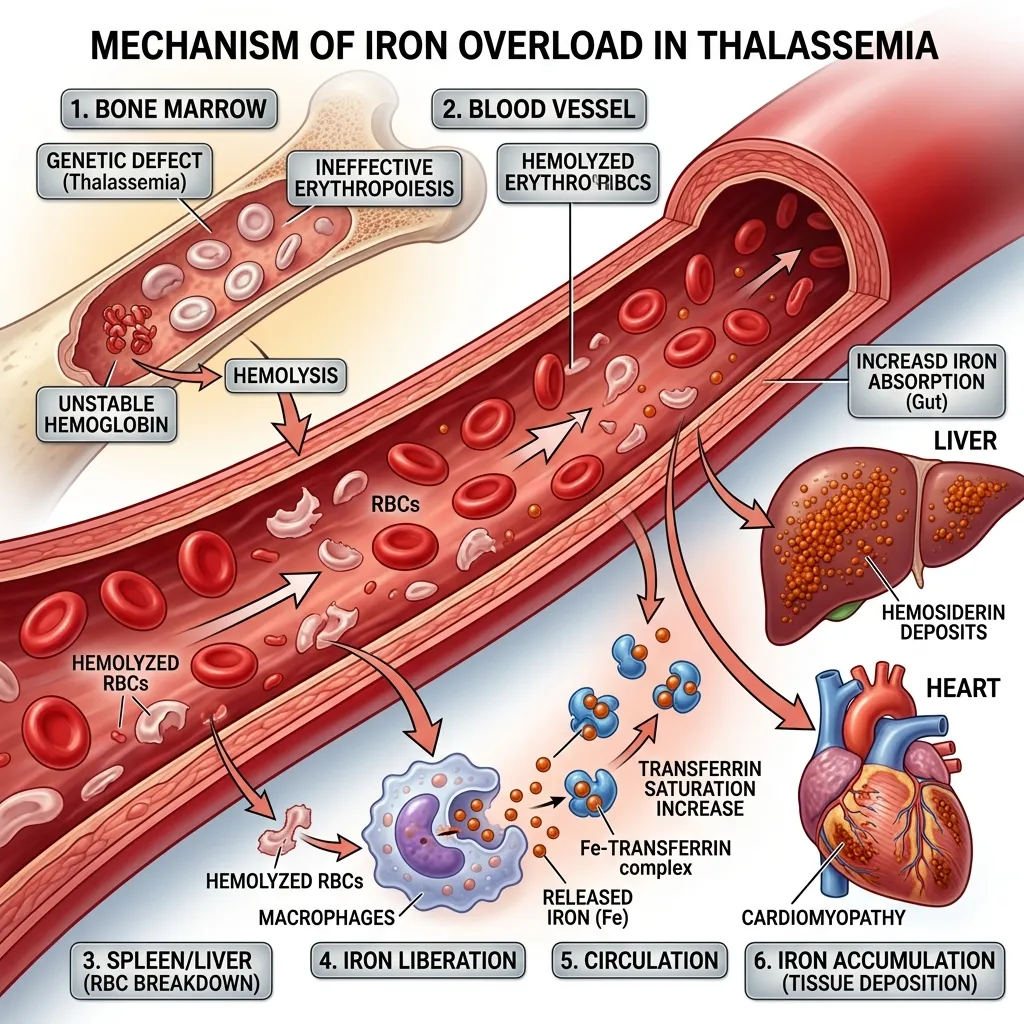 Iron overload is one of the biggest threats facing people with thalassemia. Understanding why it happens makes it easier to see why a careful diet matters so much.
How Does Thalassemia Lead to Iron Overload?
Two main factors drive iron buildup in thalassemia patients.
The first is ineffective erythropoiesis. In thalassemia, the body struggles to produce healthy red blood cells. Sensing this shortage, the body increases iron absorption from food in an attempt to make more hemoglobin. Unfortunately, this extra iron has nowhere useful to go, so it accumulates in the organs.
The second factor is blood transfusions. Patients with beta-thalassemia major often need regular transfusions to survive. Each unit of donated blood carries iron, and the body has no natural way to remove the excess. Over time, transfused iron piles up to dangerous levels.
What Are the Dangers of Excess Iron?
Excess iron does not stay in the bloodstream. It settles into the heart, liver, and endocrine glands like a slow-acting poison. In the heart, it can lead to heart failure and irregular rhythms. In the liver, it can cause scarring and damage. In the endocrine glands, it can disrupt hormones, affecting growth, fertility, and blood sugar control.
Early symptoms of iron overload are often subtle. Watch for fatigue, joint pain, abdominal pain, and heart palpitations. Because these signs are easy to miss, regular medical testing remains essential. You can learn how to track changes between appointments in this guide on how to monitor thalassemia at home.
Why Does Dietary Iron Control Matter?
Diet alone cannot remove iron from the body—that requires chelation therapy. But limiting dietary iron reduces how much new iron you take in. Think of it as turning down the tap while your medication drains the tub. Controlling food iron is a practical, daily way to support your treatment and protect your organs.
Which High-Iron Foods Should You Strictly Avoid?
Some foods deliver large amounts of easily absorbed iron. For most thalassemia patients, these are the top thalassemia diet foods to avoid.
Red and Processed Meats
Red meats contain heme iron, the type your body absorbs most efficiently. Limit or avoid:
- Beef, pork, and lamb: These are among the richest sources of heme iron.
- Sausages, hot dogs, and deli meats: Processed meats often combine high iron with high salt and preservatives.
Iron-Fortified Grains and Cereals
Many packaged products have iron added during processing. Always read labels and watch for:
- Breakfast cereals: Some fortified cereals contain a full day’s worth of iron in one bowl.
- Enriched bread and pasta: “Enriched” usually means iron has been added.
Certain Seafood
Shellfish pack a surprising amount of iron and minerals. Be cautious with:
- Clams, oysters, and mussels: These are especially high in absorbable iron.
Organ Meats
Organ meats are the most iron-dense foods of all. Strictly avoid liver and kidney, which can contain extreme amounts of iron in a single serving.
Which Foods Should You Eat in Moderation?
 Not every iron-rich food needs to disappear entirely. Some offer real nutritional value and can stay in your diet with the right approach.
Dark Leafy Greens
Spinach, kale, and Swiss chard contain non-heme iron, which the body absorbs less easily than heme iron. You can still enjoy them in moderation. Pairing them with iron-blocking foods (covered below) further lowers absorption.
Legumes
Beans, lentils, and chickpeas are healthy plant proteins, but they do carry iron. Soaking and thoroughly cooking them reduces their iron content and makes them gentler on your system.
Nuts and Seeds
Almonds, cashews, and pumpkin seeds make convenient snacks, but they add up quickly in iron. Keep portions small and occasional.
Dried Fruits
Raisins, apricots, and prunes concentrate iron as they dry. A small handful is fine now and then, but they should not become a daily habit.
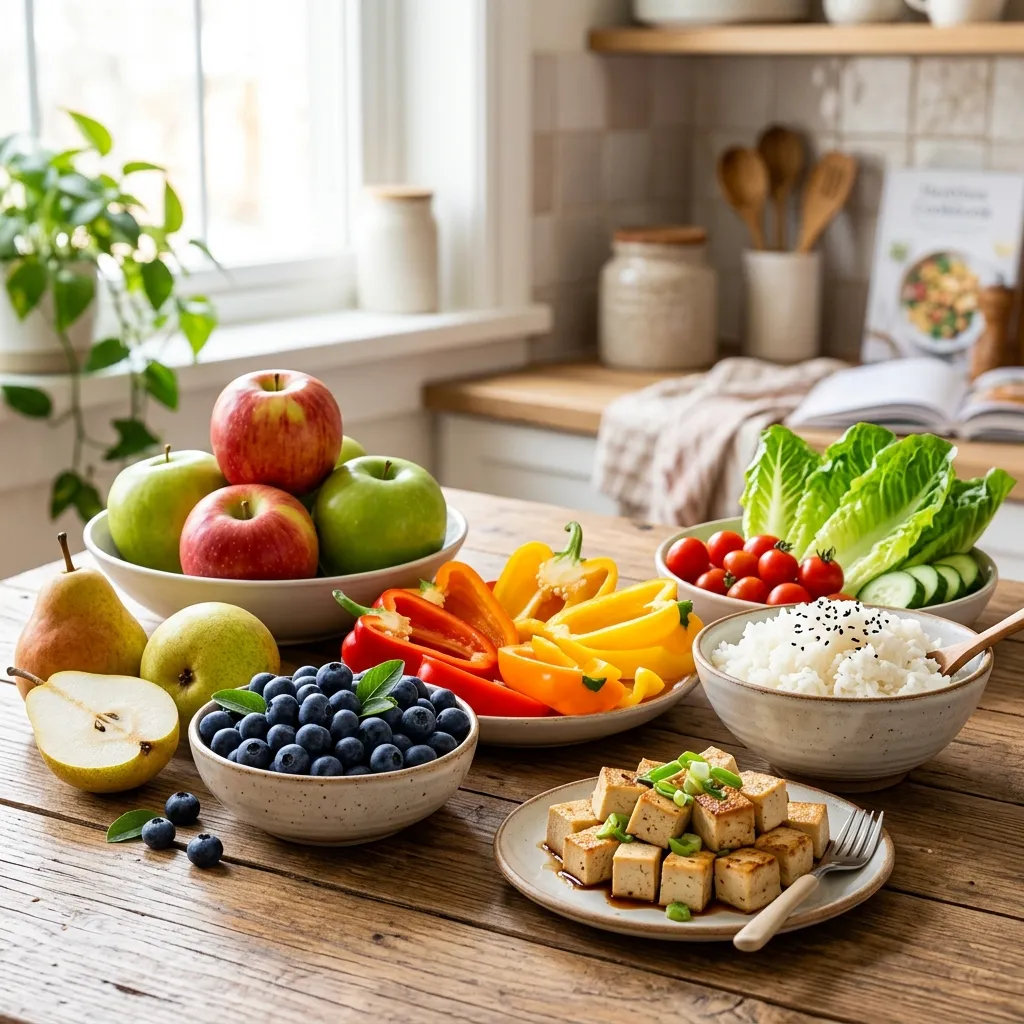
Managing a chronic illness takes a toll that goes far beyond the body. Mental health and thalassemia are deeply linked, and emotional support for thalassemia patients deserves the same attention as diet and medication.
The Psychological Impact of Living With Thalassemia
Frequent hospital visits, lifelong treatment, and dietary restrictions can feel exhausting. Many patients experience anxiety, frustration, or low mood. According to the World Health Organization, mental health is a core part of overall well-being—not a separate, optional concern. Recognizing the emotional weight of thalassemia is the first step toward managing it.
Strategies for Emotional Well-Being
Coping with thalassemia becomes easier with the right tools:
- Support groups: Connecting with others who understand your daily reality reduces isolation and offers practical advice.
- Therapy and counseling: A trained professional can help you process stress, build resilience, and navigate difficult emotions.
- Mindfulness and stress reduction: Deep breathing, meditation, and gentle movement calm the nervous system and improve sleep.
Why a Strong Support System Matters
Family and friends play a vital role in coping with thalassemia. Sharing your experience helps loved ones offer meaningful support, whether that means a ride to an appointment or simply a listening ear. A solid support network protects both your mental and physical health, making the day-to-day challenges feel far more manageable.
How Do You Plan and Prepare Thalassemia-Friendly Meals?
Putting all this knowledge into practice gets easier with a few simple habits. Planning ahead helps you stay consistent with a healthy routine and avoid common thalassemia diet foods to avoid that may increase iron levels in the body.
Consult a dietitian. A registered dietitian can build a personalized, low-iron eating plan that fits your tastes, culture, and medical needs while helping you clearly understand thalassemia diet foods to avoid for your specific condition.
Read food labels carefully. Check the iron content on every packaged product. Watch for words like “enriched” and “fortified,” which signal added iron and are important to monitor when managing thalassemia diet foods to avoid in daily meals.
Batch cook and meal prep. Preparing low-iron meals in advance helps you avoid last-minute, high-iron choices when you are tired or busy, and supports better control over thalassemia diet foods to avoid in your routine diet.
Plan for dining out. Look at menus ahead of time and choose dishes built around poultry, white fish, vegetables, and grains rather than red meat or shellfish, which are part of common thalassemia diet foods to avoid.
Stay consistent with portion control and balanced nutrition. Small, mindful choices every day make it easier to manage iron intake effectively. Over time, understanding thalassemia diet foods to avoid becomes a natural part of your lifestyle and supports long-term health.
Taking Control of Your Thalassemia Diet
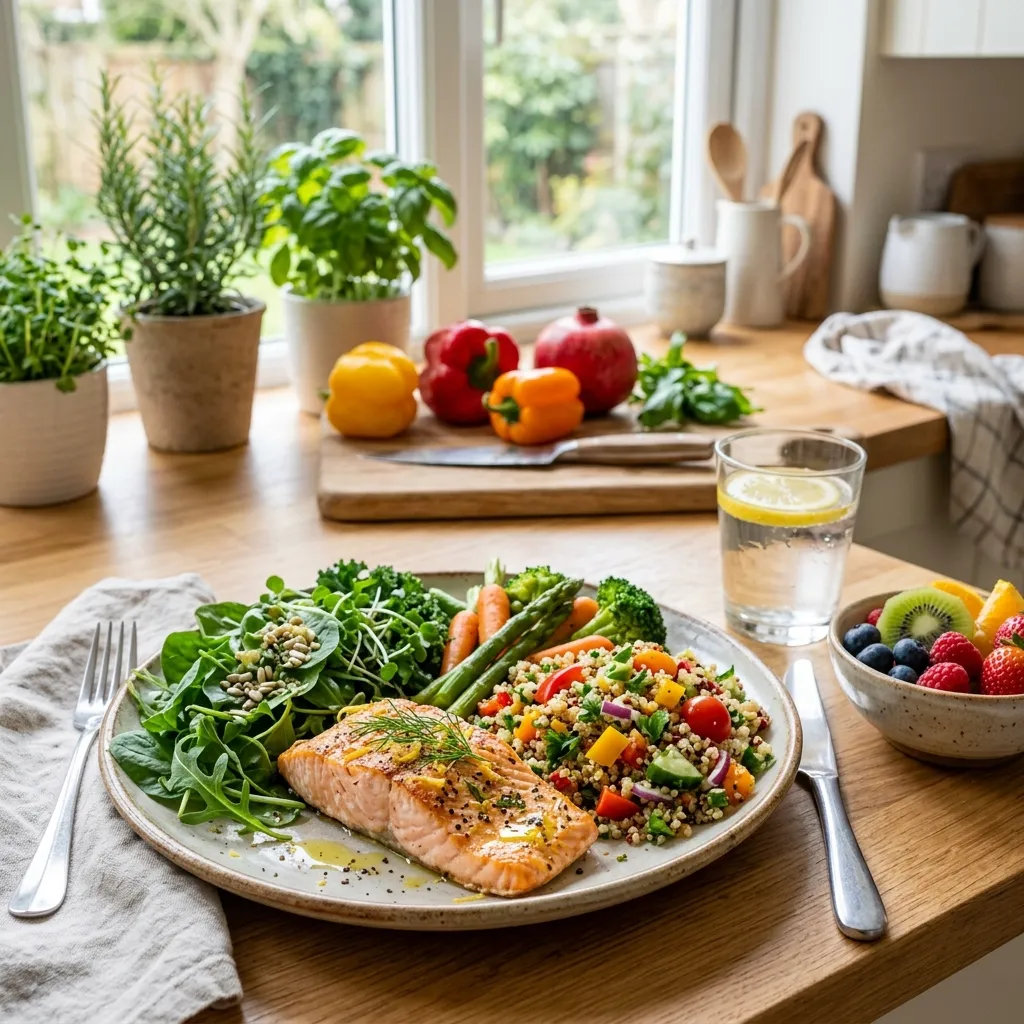 A thoughtful diet is one of the most powerful tools you have for managing thalassemia. By limiting the thalassemia diet foods to avoid—red meat, organ meats, shellfish, and iron-fortified products—you reduce new iron intake and protect your heart, liver, and glands. Smart meal pairings, the right cookware, and a focus on low-iron foods make the process easier than it sounds.
Just as important, remember that thalassemia care includes your emotional health. Coping with thalassemia means caring for your mind alongside your body, leaning on support groups, therapy, and the people who love you.
Start small this week. Swap one high-iron meal for a low-iron alternative, or add a cup of tea to your dinner. Each choice brings you closer to stronger, more confident health. For a broader look at daily care, read this living well with thalassemia guide, and pair every dietary change with guidance from your healthcare team.
Conclusion
Managing thalassemia involves more than medical treatment—it also requires careful attention to daily nutrition. Understanding thalassemia diet foods to avoid can help reduce the risk of iron overload and support better overall health. While dietary restrictions may vary depending on the type of thalassemia and individual treatment plan, making informed food choices is an important part of long-term care. By working closely with healthcare professionals and following a balanced diet, people with thalassemia can support their wellbeing and improve their quality of life.
Frequently Asked Questions (FAQ)
1. What are the main Thalassemia Diet Foods to Avoid?
The most important Thalassemia Diet Foods to Avoid include red meat, organ meats such as liver and kidney, shellfish, and iron-fortified cereals. These foods contain high levels of iron that can contribute to iron overload. Limiting them is an important part of managing thalassemia and protecting vital organs.
2. Can people with thalassemia eat spinach and leafy greens?
Yes, leafy greens can be included in a balanced diet, but moderation is important. While spinach and kale contain iron, it is non-heme iron, which is less easily absorbed by the body. Understanding Thalassemia Diet Foods to Avoid helps patients make informed choices about vegetables and overall nutrition.
3. Does drinking tea or coffee help with thalassemia?
Tea and coffee contain compounds called tannins that can reduce iron absorption from food. Drinking them alongside meals may help people who are following recommendations for Thalassemia Diet Foods to Avoid. However, caffeine intake should always be discussed with a healthcare professional.
4. Should thalassemia patients avoid vitamin C?
Vitamin C is an essential nutrient and should not be completely avoided. However, because it increases iron absorption, it is best consumed away from iron-rich meals. Combining smart vitamin C intake with awareness of Thalassemia Diet Foods to Avoid can support better iron management.
5. Why is mental health important in thalassemia management?
Mental health and thalassemia are closely connected because living with a chronic condition can create stress, anxiety, and emotional challenges. Alongside following Thalassemia Diet Foods to Avoid guidelines, emotional support, counseling, and strong social connections can improve overall quality of life.
6. Can diet cure thalassemia or remove excess iron?
No, diet alone cannot cure thalassemia or remove excess iron already stored in the body. Iron chelation therapy remains the primary treatment for reducing iron overload. Following recommendations on Thalassemia Diet Foods to Avoid helps prevent additional iron accumulation and supports medical care.
7. Is it safe to use iron supplements with thalassemia?
Most people with thalassemia should avoid iron supplements unless a healthcare provider confirms an iron deficiency. Taking unnecessary iron supplements can worsen iron overload and increase health risks. This is why understanding Thalassemia Diet Foods to Avoid and supplement use is so important.
8. What low-iron proteins are best for thalassemia?
Skinless poultry, white fish, yogurt, cheese, and other dairy products are generally lower in iron than red meat. These foods can provide important nutrients while fitting into a diet that limits Thalassemia Diet Foods to Avoid. A balanced approach helps support long-term health and energy levels.
9. How does cookware affect iron intake?
Cooking acidic foods in cast-iron cookware can increase the iron content of meals. People concerned about iron overload may prefer stainless steel, ceramic, or non-cast-iron cookware. This simple change can complement other strategies related to Thalassemia Diet Foods to Avoid.
10. Should I see a dietitian for a thalassemia diet?
Yes, a registered dietitian can provide personalized nutrition advice based on your age, health status, and treatment plan. They can help you understand Thalassemia Diet Foods to Avoid while ensuring you still receive the nutrients your body needs. Professional guidance is often the safest and most effective approach.
