



Beta thalassemia symptoms vary depending on the severity of the condition and age of the patient. Common symptoms include fatigue, pale skin, weakness, slow growth, and anemia-related complications. Early diagnosis and proper management help improve quality of life and reduce health risks associated with this inherited blood disorder.
Blood is the transportation system of the human body. Every second, millions of red blood cells travel through your veins, delivering essential oxygen to your organs, muscles, and tissues. This vital process relies heavily on a complex protein called hemoglobin. When the body cannot produce hemoglobin correctly, the entire system faces significant challenges. This is the reality for individuals living with beta thalassemia, a genetic blood disorder that affects hemoglobin production and leads to a wide range of physical complications.
Recognizing beta thalassemia symptoms early can completely change the trajectory of a person’s life. Because this condition ranges from mild to severe, the warning signs are not always obvious. Some individuals might experience slight fatigue and assume they are simply overworked, while others face severe, life-threatening complications within their first year of life. Understanding these physical cues allows families and healthcare providers to intervene promptly, preventing irreversible damage to vital organs and ensuring a higher quality of life.
This comprehensive guide breaks down everything you need to know about this condition. You will learn how to identify beta thalassemia symptoms in both children and adults, understand the genetic mutations that cause these health challenges, and explore the most effective diagnostic and management strategies available today. By equipping yourself with this knowledge, you can make informed decisions about medical care, lifestyle adjustments, and long-term health planning.
Understanding Beta Thalassemia Symptoms
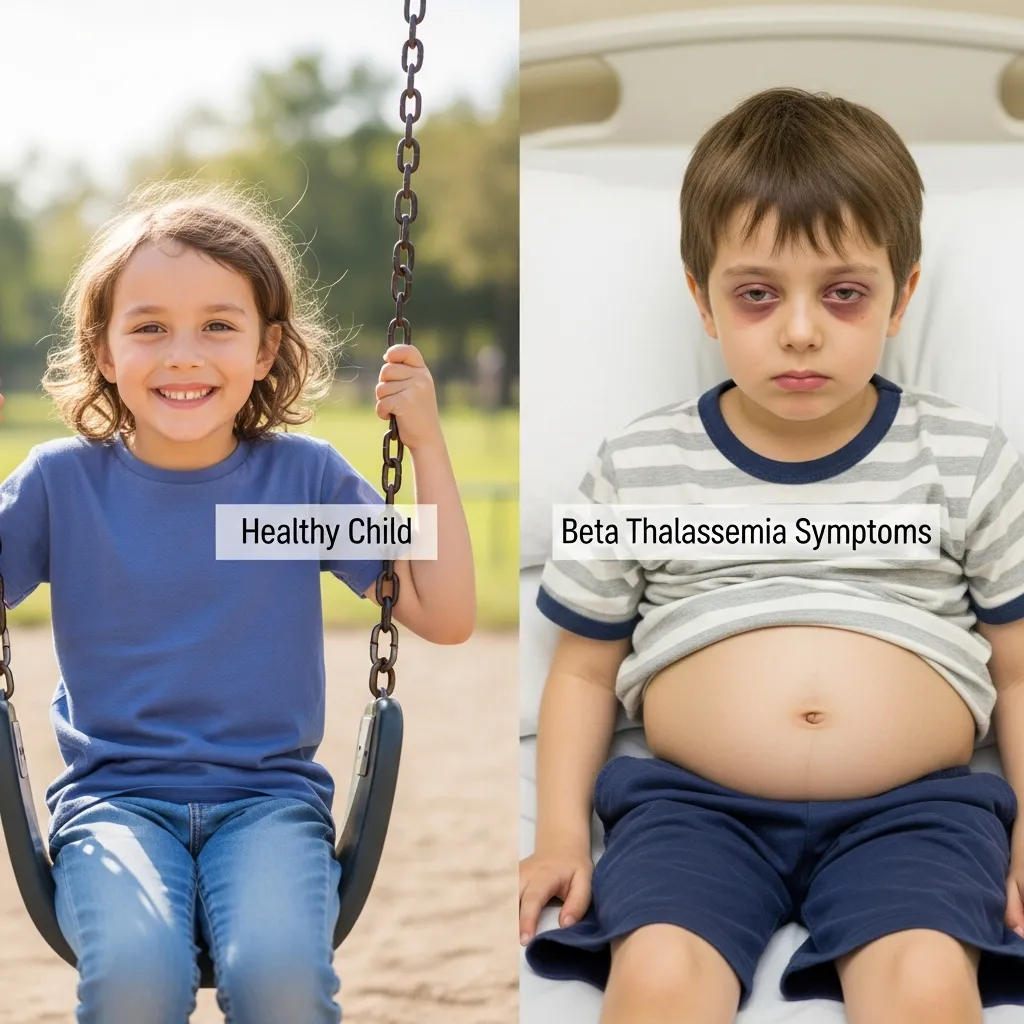 The physical manifestations of this blood disorder vary significantly from person to person. Because the condition directly impacts oxygen delivery, almost every system in the body can be affected. The severity of these physical signs depends entirely on how much normal hemoglobin the body can produce.
Common symptoms across age groups
Regardless of age, the most frequent physical signs stem directly from anemia. When tissues do not receive enough oxygen, the body enters a constant state of energy conservation. Profound fatigue is usually the first and most persistent complaint. This is a deep, cellular exhaustion that does not resolve with a good night’s sleep.
Alongside fatigue, individuals frequently experience generalized muscle weakness. Climbing a flight of stairs or carrying groceries can feel like a monumental task. Pale or yellowish skin is another common indicator. Hemoglobin gives blood its rich red color, which in turn gives skin a healthy glow. Without it, the skin appears washed out. Furthermore, the rapid breakdown of defective red blood cells releases a yellow pigment called bilirubin into the bloodstream, causing jaundice in the skin and the whites of the eyes. Dark urine often accompanies this, as the body attempts to filter and excrete the excess bilirubin.
Specific symptoms in infants and children
Infants born with severe forms of the disorder usually appear healthy at birth because they are protected by fetal hemoglobin. As the body attempts to transition to adult hemoglobin between three to six months of age, severe beta thalassemia symptoms begin to emerge. Babies may become excessively fussy, show little interest in feeding, and fail to gain weight at a normal rate. This failure to thrive is a major red flag for pediatricians.
Children with this condition also face unique physical challenges as their bodies try to compensate for the lack of healthy red blood cells. The bone marrow goes into overdrive, expanding rapidly in an attempt to produce more blood. This extreme marrow expansion can cause the bones to become thin, brittle, and abnormally shaped. It frequently leads to noticeable facial bone deformities, such as a prominent forehead, widened cheekbones, and an overbite. For more insights into recognizing these early red flags, read our guide on the 7 early signs of thalassemia. Additionally, the spleen—which is responsible for filtering out damaged blood cells—must work overtime. This causes the organ to enlarge significantly, resulting in a swollen, distended abdomen.
Symptoms in adults and less severe forms
Adults who carry less severe forms of the disorder, often referred to as thalassemia intermedia or thalassemia minor, experience a different clinical picture. Those with thalassemia minor may live their entire lives completely unaware of their condition. They might only discover it during a routine blood test that reveals mild anemia. Occasionally, they might feel slightly more winded during intense exercise, but major complications are rare.
Those with thalassemia intermedia face moderate challenges. Symptoms may not become highly problematic until later in childhood or early adulthood. These individuals might experience intermittent bouts of severe anemia triggered by illness, stress, or pregnancy. Over time, they are also at a heightened risk for developing gallstones, leg ulcers, and osteoporosis due to chronic bone marrow expansion and mild iron accumulation.
The Genetic Basis of Beta Thalassemia and its Impact on Symptoms
To truly understand why these physical challenges occur, we must look at the microscopic building blocks of the human body. Beta thalassemia is entirely genetic, meaning it is passed down from parents to their children through specific gene mutations.
How gene mutations lead to symptom manifestation
Normal adult hemoglobin is made up of four protein chains: two alpha chains and two beta chains. Beta thalassemia occurs when there is a mutation in the HBB gene, which is located on chromosome 11. This specific gene provides the instructions for making the beta-globin chains. According to the National Heart, Lung, and Blood Institute, there are hundreds of different mutations that can affect the HBB gene.
When the HBB gene is mutated, the body produces fewer beta chains. This creates an imbalance. The alpha chains continue to be produced at a normal rate, but they have no beta chains to pair with. These lonely alpha chains clump together, forming toxic clusters inside the red blood cells. These clumps damage the cell membrane, causing the red blood cells to die prematurely in the bone marrow or shortly after entering the bloodstream. The result is a drastic shortage of healthy red blood cells, which ultimately triggers the severe beta thalassemia symptoms seen in patients.
Different types of Beta Thalassemia and their symptom profiles
The severity of the disease is directly linked to the specific combination of genes a person inherits. Everyone inherits two HBB genes—one from each parent.
If a person inherits one mutated gene and one normal gene, they have beta thalassemia minor (often called beta thalassemia trait). Their bodies can still produce enough normal beta chains to function well, resulting in minimal to zero symptoms.
If a person inherits two mutated genes, the outcome depends on the severity of the specific mutations. Beta thalassemia intermedia occurs when the two mutated genes still allow for a small amount of beta-globin production. Patients experience moderate anemia and may require occasional blood transfusions.
Beta thalassemia major, historically known as Cooley’s anemia, is the most severe form. It occurs when the inherited mutations completely halt the production of beta-globin. Individuals with this form experience life-threatening anemia starting in infancy and require intensive, lifelong medical intervention to survive.
Diagnosing Beta Thalassemia
 Because beta thalassemia symptoms closely mimic other forms of anemia, such as iron deficiency, accurate medical testing is absolutely critical. Guesswork has no place in the management of genetic blood disorders.
Initial screening and diagnostic tests
The diagnostic process usually begins with a Complete Blood Count (CBC). This standard blood test measures the amount of hemoglobin and the size of the red blood cells. In patients with thalassemia, red blood cells are typically much smaller than normal (microcytic) and paler than normal (hypochromic).
If the CBC indicates potential thalassemia, the doctor will order a peripheral blood smear to look at the cells under a microscope. To confirm the diagnosis definitively, a hemoglobin electrophoresis or high-performance liquid chromatography (HPLC) test is performed. These specialized tests measure the different types of hemoglobin in the blood. Patients with beta thalassemia will show elevated levels of Hemoglobin A2 and Hemoglobin F, alongside decreased levels of normal Hemoglobin A.
The role of genetic counseling
Genetic testing is the final step in the diagnostic puzzle. By analyzing a patient’s DNA, doctors can pinpoint the exact HBB gene mutations. This is vital for predicting the long-term severity of the disease.
Genetic counseling is highly recommended for any individual diagnosed with the condition, as well as for those who carry the trait. Because carriers often have no symptoms, they can easily pass the mutated gene to their children without realizing it. According to the Centers for Disease Control and Prevention, genetic counselors help prospective parents understand their reproductive risks. If both parents carry the beta thalassemia trait, there is a 25% chance with each pregnancy that their child will be born with beta thalassemia major.
Managing Beta Thalassemia Symptoms
While there is currently no simple cure for this genetic disorder, modern medicine has transformed it from a fatal childhood disease into a manageable chronic condition.
Treatment options and their impact on symptoms
For those with beta thalassemia major, regular blood transfusions are the cornerstone of survival. Patients typically receive fresh blood every two to four weeks. These transfusions suppress the overactive bone marrow, prevent facial bone deformities, allow for normal childhood growth, and eliminate the extreme fatigue associated with severe anemia.
However, repeated blood transfusions introduce a new, dangerous problem: iron overload. The human body has no natural mechanism for excreting excess iron. After dozens of transfusions, iron begins to build up in the heart, liver, and endocrine glands. To prevent fatal organ failure, patients must undergo iron chelation therapy. This involves taking specific daily medications (either orally or via a subcutaneous pump) that bind to the excess iron and allow it to be flushed out of the body through urine or stool.
For a small percentage of patients, a hematopoietic stem cell transplant (bone marrow transplant) offers a potential cure. By replacing the patient’s defective bone marrow with healthy marrow from a matched donor, the body can begin producing normal hemoglobin. This procedure carries significant risks, but it is a viable option for younger patients with a perfectly matched sibling.
Lifestyle adjustments for better symptom management
Medical treatments must be supported by intentional daily habits. Diet plays a massive role in managing this condition. Patients receiving blood transfusions are frequently advised to strictly avoid iron-rich foods, such as red meat, fortified cereals, and spinach. Furthermore, drinking tea with meals can actively reduce the amount of iron the body absorbs from food.
Infection prevention is another critical lifestyle adjustment. Because the spleen is often damaged or surgically removed to reduce the destruction of red blood cells, patients have compromised immune systems. Staying up to date on all vaccinations, practicing excellent hand hygiene, and seeking immediate medical care for any fever are essential habits.
Safe physical activity also helps maintain cardiovascular health and bone density. Low-impact exercises like swimming, walking, and cycling are highly encouraged, provided the patient listens to their body and avoids overexertion during periods of low energy.
Living with Beta Thalassemia: Patient Stories and Support
Managing a chronic illness requires immense emotional and psychological resilience. The physical symptoms are only one part of the journey.
Personal experiences with symptoms and diagnosis
Living with this condition often means navigating a highly medicalized childhood. Frequent hospital visits, the discomfort of needles, and the strict adherence to daily medication can create a heavy emotional burden. Many patients report feelings of isolation, especially during their teenage years when they want nothing more than to fit in with their peers. Transitioning from pediatric care to adult medical care can also be a daunting experience, requiring patients to suddenly take full ownership of complex medical schedules.
Resources for patients and families
No one should walk this path alone. Connecting with others who understand the daily realities of the condition provides invaluable comfort. Organizations like the Cooley’s Anemia Foundation offer extensive resources, from educational webinars to financial assistance programs. Online support groups allow patients to share practical tips for managing chelation side effects, coping with transfusion fatigue, and maintaining a positive outlook. Psychological counseling is also highly beneficial, giving patients a safe space to process the mental weight of a lifelong diagnosis.
Taking Charge of Your Health Journey
 Beta thalassemia is a complex disorder, but understanding the mechanisms behind it strips away much of the fear and uncertainty. From the deep fatigue of cellular oxygen deprivation to the structural changes caused by bone marrow expansion, beta thalassemia symptoms are a direct reflection of the body’s struggle to maintain balance.
Early detection remains the most powerful tool in managing this condition. If you or a family member are experiencing unexplained fatigue, pallor, or delayed growth, do not hesitate to ask a doctor for a comprehensive blood panel. Modern treatments, including advanced chelation therapies and precise transfusion protocols, have dramatically improved life expectancy and daily comfort for those affected.
Stay proactive about your medical care, adhere strictly to your personalized treatment plans, and lean heavily on your support networks. Living with a genetic blood disorder requires discipline and courage, but with the right knowledge and a dedicated medical team, you can lead a vibrant, fulfilling, and active life.
