


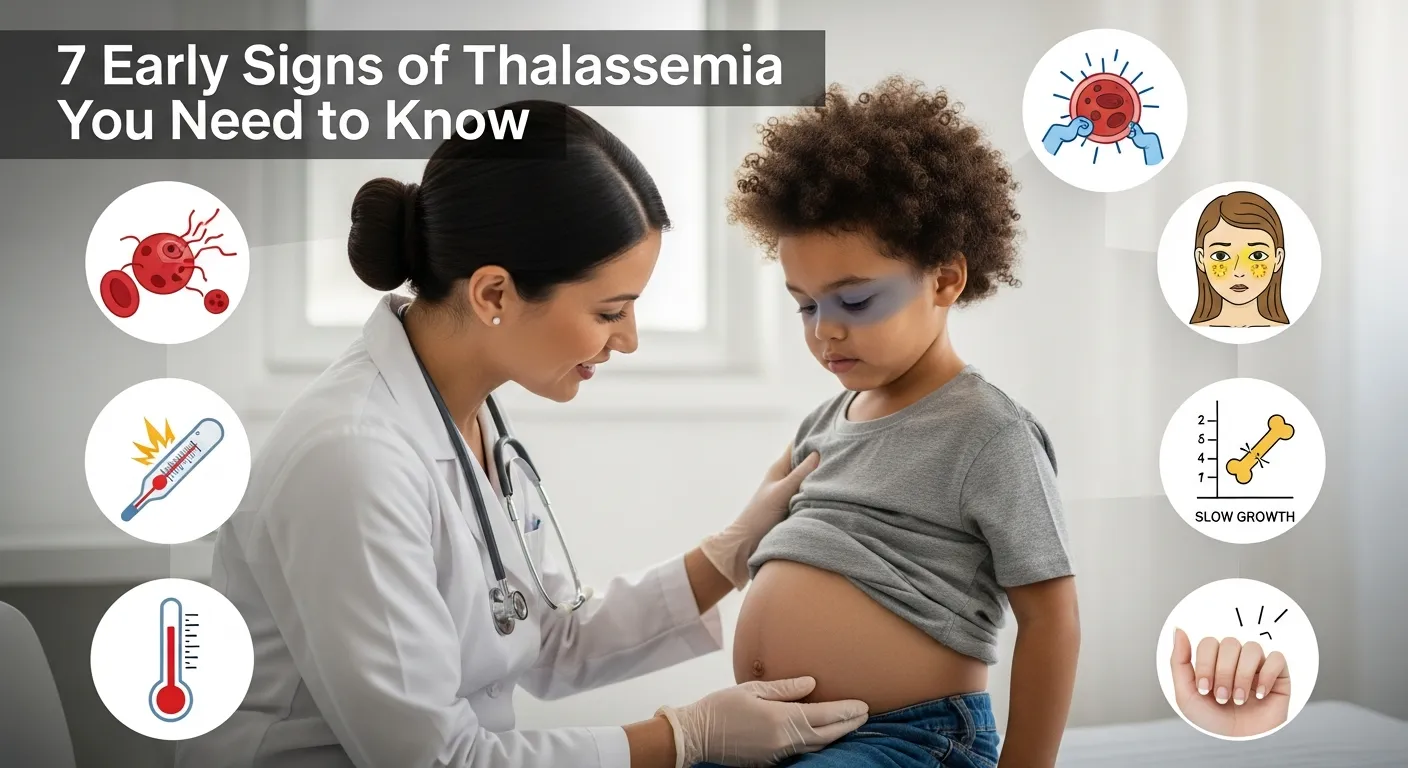
Learn the 7 early signs of thalassemia, such as fatigue, pale skin, weakness, delayed growth, and anemia symptoms. Recognizing these warning signs early can help with faster diagnosis, proper treatment, and better long-term health management.
Identifying the 7 Early Signs of Thalassemia
Recognizing the 7 early signs of thalassemia can help families seek medical advice sooner and reduce the risk of serious complications. Thalassemia is an inherited blood disorder that affects the body’s ability to produce healthy hemoglobin, the protein inside red blood cells responsible for carrying oxygen. When hemoglobin production is reduced or abnormal, the body may develop anemia and other health problems over time.
The severity of symptoms depends on whether a person has alpha thalassemia, beta thalassemia, thalassemia trait, or a more severe form such as thalassemia major. Some individuals may only experience mild symptoms, while others show signs during infancy or early childhood. Below are the 7 early signs of thalassemia that should not be ignored.
1. Excessive fatigue and weakness
One of the most common early signs of thalassemia is constant tiredness. Because the body lacks enough healthy red blood cells, organs and muscles do not receive sufficient oxygen. This often causes ongoing fatigue, weakness, dizziness, and low stamina.
Children may appear less active than normal, while adults may feel drained even after rest. If tiredness continues for weeks without a clear reason, it may indicate anemia linked to thalassemia.
2. Pale or yellowish skin
Another noticeable warning sign is pale skin. Red blood cells give skin its healthy color, so a reduced number of cells can make the face and body look pale or dull.
Some people may also develop a yellowish tint to the skin or eyes, known as jaundice. This happens when damaged red blood cells break down quickly, releasing bilirubin into the bloodstream.
3. Facial bone deformities
In more severe cases, the body tries to compensate for anemia by forcing the bone marrow to produce more blood cells. This extra activity can expand the bones, especially in the face and skull.
Over time, this may lead to facial changes such as a prominent forehead, widened cheekbones, or jaw irregularities.
4. Slow growth and development
Children with thalassemia often experience delayed growth because the body is not receiving enough oxygen and nutrients. This can affect height, weight gain, and overall development.
A child may appear smaller than classmates or reach physical milestones later than expected.
5. Abdominal swelling
The spleen helps remove damaged blood cells from circulation. In thalassemia, the spleen must work harder than normal, which can cause it to enlarge.
An enlarged spleen may create swelling or fullness in the upper left side of the abdomen, sometimes with discomfort or pressure after eating.
6. Dark urine
Dark urine can occur when large numbers of abnormal red blood cells break down. The body removes waste products such as bilirubin through urine, causing it to become darker than normal.
If urine remains dark despite proper hydration, it may indicate increased destruction of blood cells.
7. Poor appetite
Poor appetite is another common early symptom. Constant fatigue, anemia, and abdominal discomfort may reduce the desire to eat.
Children may eat less than usual, while adults may notice reduced hunger and unintended weight loss. This can further worsen weakness and slow growth.
Why early detection matters
 Knowing the 7 early signs of thalassemia can lead to earlier diagnosis through blood tests such as complete blood count (CBC), hemoglobin electrophoresis, and genetic screening. Early treatment may include nutritional support, regular monitoring, blood transfusions, or other medical care depending on the type of thalassemia.
If several of these symptoms appear together, medical consultation is important for proper diagnosis and management.
Causes and Risk Factors of Thalassemia
Understanding the causes of thalassemia helps explain why the 7 early signs of thalassemia appear in some individuals. Thalassemia is a genetic blood disorder passed from parents to children through inherited gene mutations. It is not caused by lifestyle or infection.
The main risk factor is family history. If one or both parents carry the thalassemia gene, there is a chance their child may inherit the condition. This is why genetic counseling and carrier screening are important, especially before marriage or pregnancy. Certain regions, including South Asia, the Middle East, and parts of Southeast Asia, have a higher prevalence of thalassemia carriers.
Types of Thalassemia and Symptom Severity
The 7 early signs of thalassemia may appear differently depending on the type of the disorder.
Alpha thalassemia occurs when alpha-globin genes are affected, while beta thalassemia involves beta-globin gene mutations. Beta thalassemia major usually shows more severe symptoms early in life, while beta thalassemia minor may have mild or no symptoms.
Understanding the type helps doctors determine how quickly symptoms may develop and what treatment is needed.
Diagnosis of Thalassemia
Early detection of the 7 early signs of thalassemia should be followed by proper medical testing. Doctors usually recommend blood tests to confirm the condition.
Common diagnostic methods include complete blood count (CBC), hemoglobin electrophoresis, and genetic testing. These tests help identify abnormal hemoglobin levels and confirm whether a person carries the thalassemia trait or has a more severe form of the disease.
Treatment and Management Options
There is no single universal cure for all forms of thalassemia, but early diagnosis based on the 7 early signs of thalassemia allows better management.
Treatment options may include regular blood transfusions, iron chelation therapy to remove excess iron, and in some cases, bone marrow or stem cell transplantation. Proper medical care can help improve quality of life and reduce complications.
Living with Thalassemia
People diagnosed after noticing the 7 early signs of thalassemia can still live healthy and productive lives with proper care. A balanced diet, regular medical check-ups, and adherence to treatment plans are important for long-term health.
Emotional support and awareness also play a major role in helping patients and families manage the condition effectively.
Prevention and Genetic Counseling
Preventing thalassemia focuses on awareness and genetic screening. Since the 7 early signs of thalassemia are linked to inherited genes, carrier testing before marriage can reduce the risk of passing the condition to children.
Genetic counseling helps couples understand their risk and make informed decisions about family planning.
Complications of Thalassemia if Left Untreated
If the 7 early signs of thalassemia are ignored and the condition is not managed properly, it can lead to serious health complications over time. Chronic anemia puts constant stress on the heart, liver, and other vital organs.
Some patients may develop heart problems due to long-term oxygen deficiency, while others may experience liver enlargement or damage from iron overload caused by frequent blood transfusions. Bone deformities and delayed puberty can also become more severe in untreated cases.
Early diagnosis and treatment are essential to prevent these complications and improve long-term health outcomes.
Thalassemia in Children
The 7 early signs of thalassemia are often first noticed during childhood. Children may appear weaker than others, grow slowly, or get tired easily during normal activities.
Parents may also observe pale skin, frequent infections, or reduced appetite. In more severe cases, symptoms may appear within the first two years of life, especially in beta thalassemia major.
Regular pediatric checkups and early blood tests are very important for children showing these warning signs.
Thalassemia and Pregnancy
Pregnancy can be more complex in women affected by thalassemia or those who carry the trait. The 7 early signs of thalassemia may become more noticeable during pregnancy due to increased blood demand.
Women with thalassemia may require close monitoring to ensure both mother and baby remain healthy. Genetic testing is also recommended for couples to assess the risk of passing the condition to the child.
Proper prenatal care can significantly reduce risks during pregnancy.
Diet and Nutrition for Thalassemia Patients
 Nutrition plays an important role in managing symptoms after the 7 early signs of thalassemia are detected. A balanced diet can help improve energy levels and overall well-being.
Patients are often advised to avoid excessive iron-rich foods unless recommended by a doctor, especially if they are receiving frequent blood transfusions. Foods rich in vitamins like folic acid, vitamin B12, and vitamin C can support healthy blood production.
A proper diet plan should always be guided by a healthcare professional.
Lifestyle Tips for Managing Thalassemia
After noticing the 7 early signs of thalassemia, adopting a healthy lifestyle can help improve daily life. Regular rest, moderate physical activity, and avoiding overexertion are important.
Staying hydrated, attending routine medical checkups, and following prescribed treatments help maintain stability. Emotional support from family and awareness about the condition also play a major role in managing long-term health.
When to See a Doctor
If multiple 7 early signs of thalassemia appear together, it is important to seek medical advice immediately. Persistent fatigue, pale skin, slow growth, or abdominal swelling should never be ignored.
Early consultation allows doctors to perform necessary blood tests and start treatment before complications develop. Delaying diagnosis can make symptoms more severe and harder to manage.
Iron Overload in Thalassemia
Iron overload is a common long-term issue in patients who show the 7 early signs of thalassemia and later require repeated blood transfusions. While transfusions help manage anemia, they can also cause excess iron to build up in the body.
This extra iron may deposit in vital organs such as the heart, liver, and endocrine glands, leading to complications if not properly controlled. Iron chelation therapy is often used to remove excess iron and protect organ function. Regular monitoring is essential to prevent long-term damage.
Genetic Testing and Family Screening
Since thalassemia is an inherited condition, genetic testing plays a key role after noticing the 7 early signs of thalassemia. Testing helps confirm whether a person is a carrier or has a more severe form of the disease.
Family screening is also important because parents may carry the gene without showing symptoms. Early identification of carriers allows better family planning decisions and reduces the risk of passing the condition to future generations.
Emotional and Psychological Impact
Living with thalassemia after the 7 early signs of thalassemia are identified can also affect mental health. Chronic fatigue, frequent treatments, and physical changes may lead to stress, anxiety, or emotional fatigue.
Children and adults may feel different from others due to physical limitations or medical routines. Emotional support from family, counseling, and patient support groups can help improve confidence and mental well-being.
Role of Regular Medical Checkups
Regular checkups are essential once the 7 early signs of thalassemia are observed or diagnosed. Routine blood tests help track hemoglobin levels, iron levels, and overall health status.
Doctors may adjust treatment plans based on test results to prevent complications. Consistent follow-ups ensure that the condition remains under control and reduces the risk of sudden health issues.
Blood Transfusion Therapy
Blood transfusion is one of the most common treatments for moderate to severe cases of thalassemia. It helps improve oxygen delivery in patients who show the 7 early signs of thalassemia and have significant anemia.
Transfusions can improve energy levels, growth, and overall quality of life. However, they must be done under medical supervision to avoid complications such as iron overload.
Bone Marrow and Stem Cell Transplant
 In some severe cases, bone marrow or stem cell transplantation may be considered as a potential cure. This treatment replaces the defective blood-forming cells with healthy ones from a compatible donor.
It is usually recommended for younger patients with severe symptoms after the 7 early signs of thalassemia progress into a confirmed diagnosis. Although it carries risks, it can offer long-term improvement or cure in selected cases.
Importance of Awareness Campaigns
Public awareness is crucial in reducing the impact of thalassemia in society. Understanding the 7 early signs of thalassemia helps people recognize symptoms early and seek timely medical help.
Awareness programs in schools, communities, and healthcare centers encourage genetic screening and early diagnosis, which can significantly reduce the number of severe cases in the future.
Frequently Asked Questions (FAQ)
1. What are the 7 early signs of thalassemia?
The 7 early signs of thalassemia include excessive fatigue, pale or yellow skin, facial bone changes, slow growth, abdominal swelling, dark urine, and poor appetite.
2. At what age do thalassemia symptoms usually appear?
Symptoms can appear in early childhood, especially in moderate to severe cases, while milder forms may show signs later or remain unnoticed.
3. Can thalassemia be detected early?
Yes, early detection is possible through blood tests like CBC, hemoglobin electrophoresis, and genetic testing, especially when early signs are present.
4. Is thalassemia a curable disease?
Some severe cases can be treated with bone marrow or stem cell transplant, but most forms are managed with ongoing medical care.
5. What causes thalassemia?
Thalassemia is caused by inherited genetic mutations passed from parents to children. It is not caused by diet, infection, or lifestyle.
6. Can a person with thalassemia live a normal life?
Yes, with proper treatment, regular checkups, and healthy lifestyle management, many patients live normal and productive lives.
7. Is thalassemia dangerous?
It can be serious if untreated, especially in severe forms, but early diagnosis and proper care significantly reduce risks.
8. How is thalassemia diagnosed?
Doctors diagnose it using blood tests, hemoglobin analysis, and genetic screening to confirm the type and severity.
9. Can thalassemia be prevented?
It cannot be fully prevented, but genetic counseling and carrier screening can reduce the risk of passing it to children.
10. When should I see a doctor for thalassemia symptoms?
You should see a doctor if multiple early signs like fatigue, pale skin, or slow growth appear together or persist for a long time.
Conclusion
The 7 early signs of thalassemia play a crucial role in identifying the condition at an early stage. Symptoms such as fatigue, pale skin, slow growth, and abdominal swelling should never be ignored, especially in children and young adults. Early recognition allows timely diagnosis, proper treatment, and better long-term health management.
Although thalassemia is a genetic disorder, early medical care, regular monitoring, and healthy lifestyle choices can significantly improve quality of life. Awareness and early action remain the most effective ways to manage and reduce complications associated with thalassemia.
